



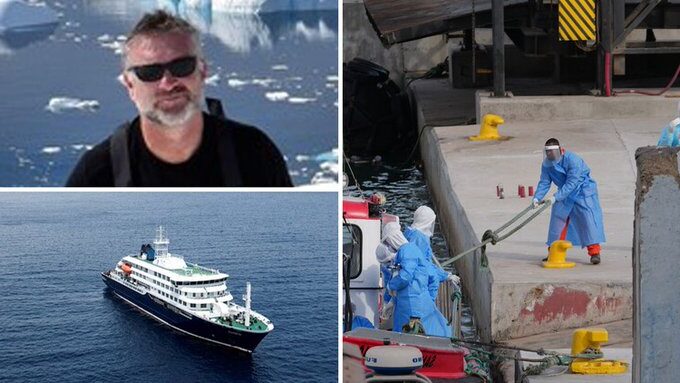
Public health experts are racing to contain a nascent hantavirus cluster that has spilled from a remote cruise ship into commercial air travel, as a missing British passenger is hunted across several continents and a KLM flight attendant lies in hospital after possible exposure linked to the same outbreak.
The case has jolted global travel networks, raising questions about how quickly infectious diseases can jump from isolated expeditions to crowded airports and cabin crews.
The drama began aboard the Dutch‑flagged MV Hondius, an expedition cruise sailing from Ushuaia, Argentina, to Cape Verde, which is now linked to at least three deaths and several confirmed hantavirus infections.

Among the 30 passengers who disembarked early at St Helena, a British territory in the South Atlantic, was a woman who later died in South Africa, and a seventh British national whose whereabouts remain unknown.
UK health authorities say all other Brits who left the voyage are either in isolation or under monitoring, but the missing traveler has become a focal point for international contact tracing.
The situation grew more complex when a senior flight attendant for KLM Royal Dutch Airlines was hospitalized in the Netherlands with suspected hantavirus infection after coming into contact with a dead passenger who had flown from Johannesburg to Amsterdam following the cruise.
The woman, whose husband had died on the ship, began deteriorating during her onward journey and was pronounced dead in South Africa, but it took days for the rare Andes strain of hantavirus to be confirmed.
If the flight attendant’s case is confirmed, it would mark the first suspected infection outside the cruise environment in this cluster, intensifying fears about airborne or close‑contact transmission.
Behind the clinical headlines lies a collision of trust, logistics, and passengers’ expectations. The Antarctic‑style expedition ship marketed itself to affluent older travelers, many of whom have since been told they may have been exposed without clear early warnings.
Some passengers have taken to social media to describe being assured that the first death on board was not contagious, even as internal alerts were being circulated among health agencies.
Cruise and aviation insurers are now quietly recalibrating exposure models, while infectious‑disease specialists warn that the real test of this outbreak will be whether secondary cases emerge in European and African cities, not just on the vessel.
Five of 8 suspected Hantavirus cases linked to the MV Hondius cruise have been confirmed. WHO says global risk remains low. Argentina will send 2,500 test kits to 5 countries. Contacts are being traced; a flight attendant was hospitalized in Amsterdam.#ThisIsMojarrita… pic.twitter.com/r1cQ9M7zS2
— Jorge Gutierrez (@thisismojarrita) May 7, 2026
As the MV Hondius heads toward the Canary Islands under medical supervision, and European authorities scrutinize the flight‑attendant chain of transmission, the missing British passenger remains a symbol of how fragile modern containment systems can be when travelers move silently across borders.
The episode is likely to trigger new scrutiny of how cruise lines communicate outbreaks, how airlines handle symptomatic passengers, and how health agencies coordinate tracking across jurisdictions before a quiet case in the sky becomes a headline‑making crisis.
Also Read | Bonnie Tyler’s Emergency Bowel Surgery in Portugal Turns Critical

