



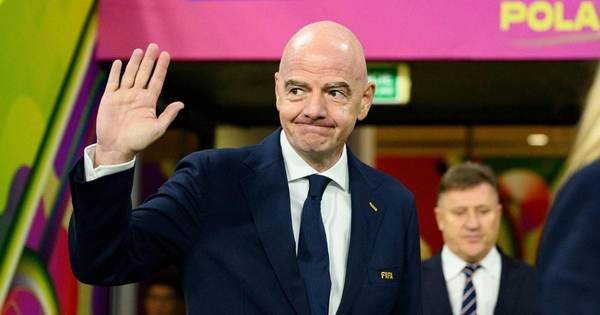
FIFA President Gianni Infantino has apologised for mistakes made in the handling of the FIFA Forward Enterprise proposal at the first FIFA Council meeting since the 2026 World Cup. Speaking at the Council session in Zurich on October 15, 2026, Infantino acknowledged errors “in relation to the communication and consultation” surrounding the controversial plan that would have sold a stake in FIFA’s commercial rights to private investors. The FIFA president also confirmed that every member association is set to receive $25 million under a proposed initiative called the FIFA Surplus Solidarity Programme for the 2027 to 2030 funding cycle. In the same session, Infantino announced that the FIFA Peace Prize will be evaluated by FIFA’s Social Responsibility Commission and that the Legal Commission will review the disciplinary code to stop automatic one-game bans from being suspended, a direct response to the Folarin Balogun red card saga during the World Cup. Not all FIFA Council members were satisfied with the explanations, with UEFA continuing to drive efforts to find a candidate to challenge Infantino in the 2027 presidential election.

What Did Gianni Infantino Apologise For at the FIFA Council Meeting?
Infantino used the FIFA Council meeting in Zurich to formally apologise for the way the FIFA Forward Enterprise proposal was communicated and consulted upon. He told Council members that the plan to sell a stake in FIFA competitions to outside investors has been permanently withdrawn and will not return in any form. He called for unity and maintained that the project’s stated goal had always been to increase and more effectively channel investment in football development.
External lawyers briefed the Council on the legal background of FIFA Forward Enterprise. The details remain confidential because of ongoing legal proceedings in the United States. The Council also agreed to create a working group, including all confederations, to examine FIFA’s governance framework in detail.
The apology came nearly three months after a crisis meeting in Rabat, Morocco, in early August, where FIFA Secretary General Mattias Grafstrom and members of the FIFA Management Board reaffirmed their support for Infantino. Grafstrom had earlier written an internal memo describing the FFE situation as “a sad and reproachable series of events.” At that August meeting, the leadership described Infantino as the only official elected by the 211 member associations and reaffirmed its full support for his continued presidency. FIFA acknowledged that the Council and member associations should not have felt excluded from the process.
🚨 𝗖𝗢𝗡𝗙𝗜𝗥𝗠𝗘𝗗: Gianni Infantino has approved FIFA’s plans to give all 211 member associations $25M from 2027 to 2030.
🗣️ Infantino: “My thanks go to everyone who has contributed to make this incredible raise possible, which will have a real impact in football development all over the world, which is FIFA’s main mission.”
“The proposal was agreed and it means now concretely that all 211 FIFA Member Associations, all of them will receive $25M in the ’27-’30 cycle. In the 10 years since I am FIFA President, we have gone from $1M per FIFA Member Association to $25M.”
(Source: @JacobsBen)
— Transfer News Live (@DeadlineDayLive) October 15, 2026
What Was FIFA Forward Enterprise and Why Did It Collapse?
FIFA Forward Enterprise was a proposed company that would have managed the commercial and operational aspects of FIFA’s tournaments. Announced on July 28, 2026, the plan involved selling ownership stakes to private investors, with Thrive Eternal, a company launched in April 2026 by Joshua Kushner, named as the proposed lead investor. The proposal was presented as an opportunity to raise billions in additional development funding for member associations.
The proposal drew immediate and fierce opposition from across the football world. UEFA called it a line football’s governing bodies should never cross. CONCACAF rejected it outright. The Asian Football Confederation said it exposed weaknesses in FIFA’s decision-making processes. The Football Association, the Welsh FA, and the Scottish FA all raised concerns about governance and process, with the FA stating it had been unaware of the proposal before its public announcement.
By July 30, UEFA had held an emergency meeting and threatened that its national teams would not take part in any FIFA competition while the proposal remained alive. Within five days of the announcement, FIFA’s own Chief Operating Officer, Kevin Lamour, had described FFE as “a project of one person,” and Infantino’s senior adviser, Carlos Cordeiro, had resigned. U.S. Congressman Jamie Raskin criticised the Trump family link through Joshua Kushner, while U.K. Prime Minister Andy Burnham said football does not belong to investors.
By August 1, FIFA confirmed that FFE would not proceed. UEFA responded by saying that FIFA’s current leadership had lost its confidence and that the process of rebuilding trust had only begun. The Italian Football Federation, FIGC, also withdrew its support for Infantino’s re-election bid.
FIFA Surplus Solidarity Programme: $25 Million for Every Member Association
Infantino confirmed at the October Council meeting that each of FIFA’s 211 member associations would be eligible for $25 million over the 2027 to 2030 funding cycle under a proposed initiative called the FIFA Surplus Solidarity Programme. This represents more than double the $10 million originally planned under FIFA Forward 4.0 and a significant increase from the $1 million per association when Infantino took office in 2016.
The total funding package amounts to approximately $6.35 billion, sourced from FIFA’s reserves, which are expected to reach between $5.2 and $5.6 billion at the end of 2026 following the financial reconciliation of the 48-team World Cup. Cash reserves would be maintained at a minimum of $1.7 billion for contingencies.
The additional $15 million per association breaks down into three categories. Five million dollars would go toward operational costs, paid at $1.25 million per year, earmarked for women’s and youth football, including national teams and competitions. Another five million would fund infrastructure projects such as stadiums, technical centres, and headquarters. The final five million would support special long-term projects, available until December 31, 2036.
Each of FIFA’s six confederations would also receive an additional $33 million over the four-year cycle, totalling $99 million across all six. The 13 zonal and regional associations would each receive an extra $2.75 million, or $11 million in total.
The financial package will be finalised by the relevant committees and the Council at its December meeting in Doha before being submitted to the FIFA Congress on March 18, 2027, which will also host the presidential election.
The programme represents a direct counter to the earlier proposal from UEFA President Aleksander Ceferin and CONCACAF President Victor Montagliani, who had proposed a one-time $10 million payment per association from reserves, with any surplus above $6 billion distributed. Critics have noted that the $25 million comes with many conditions and could be spread over approximately eight years rather than one four-year cycle, with federations reportedly considering the approval and distribution process restrictive.
FIFA Peace Prize Under Review After Trump Controversy
Infantino confirmed that the FIFA Peace Prize will be evaluated by FIFA’s Social Responsibility Commission, with a decision expected in December 2026. This follows months of controversy over the prize’s inaugural award to U.S. President Donald Trump at the 2026 World Cup draw at the Kennedy Center in Washington on December 5, 2025.
FIFA has never publicly explained how Trump was chosen for the award or who decided on the recipient. People familiar with the process have said they learned of the prize through media reports. FairSquare, a London-based human rights nonprofit, filed a complaint with FIFA’s Ethics Committee in December 2025, arguing that awarding a peace prize to a sitting political leader constituted “a clear breach of FIFA’s duty of neutrality.” FairSquare added that if Infantino acted alone without statutory authority, the decision “should be considered an egregious abuse of power.”
The Norwegian Football Federation separately asked the Ethics Committee to investigate the award. NFF president Lise Klaveness said the federation acted independently in filing the request.
Infantino has consistently defended the award, telling Sky News in February 2026 that Trump’s conflict resolution “saved thousands of lives” and that he “deserved respect” for protecting people. Under FIFA’s ethics code, a violation of the duty of political neutrality can carry a ban from football of up to two years.
Disciplinary Code Changes After the Flo Balogun Saga
The FIFA Legal Commission will review disciplinary procedures and report its findings in December 2026, a direct response to the Folarin Balogun incident during the 2026 World Cup. The proposed amendment to the FIFA Disciplinary Code would prohibit suspensions of automatic one-match bans in the future, closing the loophole that created the controversy.
Balogun, the American striker who plays for AS Monaco, was sent off by referee Raphael Claus in the 64th minute of the United States’ 2-0 round-of-32 victory over Bosnia and Herzegovina on July 4 for a challenge on defender Tarik Muharemovic. The red card triggered an automatic one-match ban under Article 66.4 of the FIFA Disciplinary Code, which would have ruled Balogun out of the round-of-16 match against Belgium the following day.
On July 5, FIFA’s Disciplinary Committee invoked Article 27 of the code, placing the one-match suspension on one-year probation rather than enforcing it. This cleared Balogun to play against Belgium. The decision followed a phone call from Trump to Infantino to demand a review. Trump subsequently thanked FIFA on Truth Social for “reversing a great injustice.” A U.S. official told Axios that the government had supplied “additional evidence” centred on referees’ use of slow-motion replay.
UEFA called the decision “unprecedented, incomprehensible and unjustifiable” and said FIFA had “crossed a red line.” Belgium’s federation formally protested, citing Article 66.4, which makes a red-card ban automatic, and the 2026 Competition Regulations, which state that teams cannot appeal a referee’s on-field judgement. Article 27 sets no criteria for its application: no threshold of clear error, no evidentiary test, and no requirement to publish reasons.
Balogun admitted that the controversy created tension inside the U.S. squad. He told beIN Sports: “I could almost sense some nervousness among my teammates because it was such a unique situation.” The United States lost to Belgium 4-1 in Seattle. Infantino has maintained that the Disciplinary Committee’s decision was made independently of him.
UEFA Opposition and the 2027 FIFA Presidential Election
Not all FIFA Council members were satisfied with Infantino’s explanations at the Zurich meeting. England’s Football Association chair Debbie Hewitt, who also serves as a FIFA vice-president, said Infantino had not answered critical questions, including requests for access to FFE documents. She stated bluntly that if he could not answer those questions, he was not fit to serve as FIFA president.
Germany’s Bernd Neuendorf was equally direct, stating that confidence in Infantino had been lost. Wales, Sweden, and Serbia have previously withdrawn their endorsements of Infantino, and England’s FA is expected to follow.
UEFA continues to drive efforts to find a candidate to run against Infantino in the March 2027 election. Victor Montagliani, the CONCACAF President and FIFA vice-president, is the most concrete option and is reportedly considering a run. Canadian Prime Minister Mark Carney has praised Montagliani as a respected football administrator. Other names mentioned in speculation include UEFA President Aleksander Ceferin, Sheikh Salman bin Ibrahim Al Khalifa, PSG President Nasser Al-Khelaifi, and Norwegian NFF President Lise Klaveness. Both Ceferin and Al-Khelaifi have publicly ruled out running.
Infantino confirmed at the FIFA Congress in Vancouver in April 2026 that he will seek another term. The deadline for candidate nominations is November 18, 2026. The election takes place at the 77th FIFA Congress in Rabat on March 18, 2027. Candidates require written support from at least five of FIFA’s 211 member associations, and winning requires two-thirds of valid votes in the first round before dropping to a simple majority in subsequent rounds.
Despite the European opposition, Infantino retains significant support among smaller and developing associations, particularly in Africa and Asia. Mauritania’s football federation president, Ahmed Yahya, publicly backed him at the Council meeting, stating that Infantino “is moving football forward across the world.”
Who Is Gianni Infantino?
Giovanni Vincenzo “Gianni” Infantino was born on March 23, 1970, in Brig, in the canton of Valais, Switzerland. His parents were Italian immigrants who had settled in the Swiss Alps. He holds Swiss, Italian, and Lebanese citizenship.
Infantino studied law at the University of Fribourg, earning an LLB. His career in football administration began in the late 1990s as Secretary General of the International Centre for Sports Studies at the University of Neuchatel. He joined UEFA in 2000, became Director of Legal Affairs and Club Licensing in 2004, Deputy General Secretary in 2007, and UEFA General Secretary in 2009.
He was elected FIFA President on February 26, 2016, following the corruption scandal that brought down his predecessor Sepp Blatter. He was re-elected unopposed in June 2019. In 2023, the FIFA Council ruled that his first three years did not count toward the term limit, which could allow him to remain in office until 2031.
Under his presidency, FIFA has overseen the 2018, 2022, and 2026 World Cups, expanded the Women’s World Cup to 32 teams, relaunched the Club World Cup with 32 clubs, and reported revenues that more than doubled. His tenure has also been marked by controversies including the FFE proposal, the Trump Peace Prize, the Balogun red card suspension, the Saudi Arabia 2034 World Cup bid process, and a criminal complaint filed by Michel Platini in France.
Infantino is married to Leena Al Ashqar. They have four daughters.
Quick-Reference Profile
| Detail | Information |
|---|---|
| Full Name | Giovanni Vincenzo “Gianni” Infantino |
| Born | March 23, 1970 |
| Birthplace | Brig, Valais, Switzerland |
| Nationality | Swiss (also Italian and Lebanese citizenship) |
| Education | LLB, University of Fribourg |
| Position | FIFA President (since February 26, 2016) |
| Previous Role | UEFA General Secretary (2009 to 2016) |
| Re-elected | Unopposed, June 2019 |
| Next Election | March 18, 2027, 77th FIFA Congress, Rabat |
| Wife | Leena Al Ashqar |
| Children | Four daughters |
| Key Council Decisions | FFE apology, $25m Surplus Solidarity Programme, Peace Prize review, Disciplinary Code amendment |
| FIFA Surplus Solidarity Programme | $25m per member association, 2027 to 2030 |
FAQs
Why did Gianni Infantino apologise at the FIFA Council meeting?
Infantino apologised for mistakes in the communication and consultation of the FIFA Forward Enterprise proposal, which would have sold a stake in FIFA’s commercial rights to private investors led by Joshua Kushner’s Thrive Eternal. The plan was permanently withdrawn after fierce opposition from UEFA, CONCACAF, the AFC, multiple national associations, and senior FIFA officials.
What is the FIFA Surplus Solidarity Programme?
The FIFA Surplus Solidarity Programme is a proposed initiative to distribute $25 million to each of FIFA’s 211 member associations over the 2027 to 2030 funding cycle. The funding comes from FIFA’s reserves, forecast to reach $5.2 to $5.6 billion after the 2026 World Cup. It more than doubles the $10 million previously planned under FIFA Forward 4.0.
Why is the FIFA Peace Prize being reviewed?
The FIFA Peace Prize is under review by FIFA’s Social Responsibility Commission after its inaugural award to U.S. President Donald Trump drew formal complaints from the human rights group FairSquare and the Norwegian Football Federation. FIFA has never publicly explained how Trump was selected, and critics argue the award breached FIFA’s duty of political neutrality.
What happened with Folarin Balogun’s red card at the 2026 World Cup?
Balogun received a red card in the USA’s 2-0 round-of-32 win over Bosnia and Herzegovina for a challenge on Tarik Muharemovic. FIFA’s Disciplinary Committee invoked Article 27 to suspend his automatic one-match ban on one-year probation after Trump called Infantino to demand a review. Belgium protested, and UEFA called the decision “unprecedented, incomprehensible and unjustifiable.” The USA lost to Belgium 4-1 in the next round.
Will Infantino face a challenger in the 2027 FIFA presidential election?
UEFA is actively working to find a candidate to run against Infantino in the March 2027 election. CONCACAF President Victor Montagliani is the most discussed option. The candidate nomination deadline is November 18, 2026, with the election set for the 77th FIFA Congress in Rabat on March 18, 2027. Infantino confirmed he will seek another term.
What changes will be made to FIFA’s Disciplinary Code?
FIFA’s Legal Commission will review disciplinary procedures and report in December 2026. The proposed change would prohibit the suspension of automatic one-match bans, closing the Article 27 loophole that allowed FIFA to defer Balogun’s ban during the 2026 World Cup.
Also Read | Historic: 2026 FIFA World Cup to Hold Three Opening Ceremonies

