


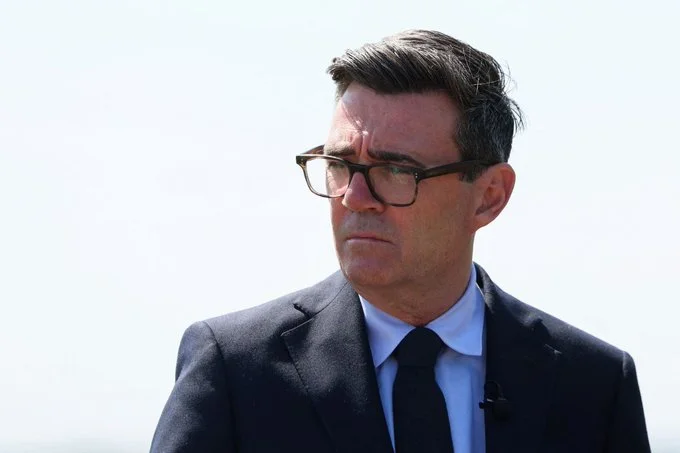
Prime Minister Andy Burnham has plunged his government into a political storm after calling for an “honest discussion” about returning to European Union freedom of movement, only to spend the following morning ruling it out and insisting he would never move ahead of the British public on Brexit. Burnham’s comments, published in the Sunday Times on October 25, 2026, described pre-Brexit migration as “a type of immigration that perhaps wasn’t as difficult” as the current system and called for a “very factual, quite evidence-based debate” about the UK’s future relationship with Europe. By Monday morning, the Prime Minister was on Good Morning Britain saying, “No, I mean I wasn’t saying that yesterday,” when asked whether he was proposing a return to free movement. His spokeswoman later told journalists that Burnham was “crucially not leaning either way” on the question. The rapid reversal has drawn accusations of a “humiliating climbdown” from critics across the political spectrum, with Reform UK leader Nigel Farage calling it a “total betrayal of Brexit Britain” and Conservative leader Kemi Badenoch describing the reopening of Brexit negotiations as “a terrible idea.” The confusion comes less than a month before Burnham’s planned November 20 summit with EU leaders in Brussels, where he hopes to strike new deals on food and drink trade, youth mobility, and emissions trading.

Andy Burnham: Quick-Reference Profile
| Detail | Information |
|---|---|
| Full Name | Andrew Murray Burnham |
| Date of Birth | January 7, 1970 |
| Birthplace | Aintree, Lancashire, England |
| Education | Fitzwilliam College, Cambridge (English) |
| Political Party | Labour and Co-operative |
| Spouse | Marie-France van Heel (married 2000) |
| Children | Three |
| MP For | Leigh (2001 to 2017), Makerfield (2026 by-election) |
| Previous Roles | Health Secretary, Culture Secretary, Mayor of Greater Manchester |
| Became PM | July 20, 2026 |
| Preceded By | Keir Starmer |
| Notable Policy | Bee Network bus franchising, National Care Service |
What Burnham Said About EU Freedom of Movement in the Sunday Times
The political firestorm began with an interview published in the Sunday Times on October 25, 2026, in which Burnham called for the UK to have an “honest discussion” about whether it should return to some form of EU freedom of movement. His remarks went further than any sitting Prime Minister has gone on the Brexit question since the 2016 referendum.
“I think we’ve just got to have an honest discussion about those things,” Burnham told the newspaper. He drew a distinction between pre-Brexit EU migration and the current immigration system, saying that freedom of movement represented “a type of immigration that perhaps wasn’t as difficult” as the post-Brexit regime. He described the old system as “revolving door migration where people would come and then go back,” suggesting it was fundamentally different from the permanent settlement patterns that have emerged under the points-based system introduced after Brexit.
Burnham also cited the UK’s loss of access to Eurodac, the EU’s asylum fingerprint database, as a practical consequence of Brexit that was making border control harder rather than easier. He said he wanted a “very factual, quite evidence-based debate” about the UK’s relationship with Europe, rather than the politically charged arguments that had defined the Brexit era.
The comments landed against a backdrop of shifting public attitudes. Office for National Statistics figures released in May 2026 showed that long-term net migration had fallen to approximately 171,000 in the year ending December 2025, down from a peak of 649,000 in the year ending June 2023. Despite the fall, immigration remained a top concern for voters, and any suggestion of reopening freedom of movement was politically explosive.
How Andy Burnham Became Prime Minister After Keir Starmer’s Resignation
To understand the significance of Burnham’s Brexit comments, it helps to know how he arrived in Downing Street. Born on January 7, 1970, in Aintree, Lancashire, Burnham was raised in nearby Culcheth in a Catholic family and joined the Labour Party at the age of 15. He read English at Fitzwilliam College, Cambridge, and entered Parliament in 2001 as the MP for Leigh in Greater Manchester.
Under Tony Blair and Gordon Brown, Burnham held a succession of government posts, including Minister of State for Health, Chief Secretary to the Treasury, Culture Secretary, and Health Secretary. He ran for the Labour leadership twice, finishing fourth in 2010 and second behind Jeremy Corbyn in 2015. In 2017, he left Parliament to become the first directly elected Mayor of Greater Manchester, where he won three consecutive elections with commanding margins. His flagship achievement as mayor was the Bee Network, a bus franchising system that brought public transport under local control and introduced capped fares across the city region.
Burnham’s path to the premiership opened in June 2026, when Keir Starmer announced his resignation as Labour leader and Prime Minister. Starmer’s departure followed months of falling approval ratings, the controversy over Peter Mandelson’s appointment and subsequent dismissal as ambassador to Washington amid the Jeffrey Epstein revelations, and Labour’s losses to Reform UK in the May 2026 local elections. Burnham resigned as mayor on June 19, won the Makerfield by-election to return to Parliament, and was elected Labour leader unopposed on July 17 with the backing of former leadership rival Wes Streeting. King Charles III appointed him Prime Minister on July 20, 2026, making him the seventh person to hold the office in a decade, the first Catholic-raised PM, and the first Co-operative Party member to serve as Prime Minister.
Burnham’s Monday Morning Walkback and the Referendum Pledge
The political backlash to the Sunday Times interview was swift and severe, and by Monday morning, October 26, Burnham was in full retreat. Appearing on Good Morning Britain and in a series of broadcast interviews, the Prime Minister systematically walked back his weekend comments.
Asked directly whether he was proposing to reinstate freedom of movement, Burnham replied: “No.” When pressed on whether such a change could happen without a referendum, he said: “No, I mean I wasn’t saying that yesterday.” He added that he was “not proposing any changes in this Parliament” and that he would “never move ahead of the British public when it comes to Brexit.”
Burnham ruled out the UK rejoining the EU, entering the Schengen zone, or adopting the euro during the current parliamentary term. Asked whether Labour would pledge to rejoin the EU at the next general election, he said: “No time soon, if at all,” adding that there was “no election coming anytime soon.”
However, the Prime Minister stopped short of closing the door entirely. He acknowledged that the UK had “lost immigration control in the way that we once had” in the decade since the Brexit referendum, leaving open the question of whether a future government might revisit the issue. The careful ambiguity frustrated both sides of the debate, with Leave supporters seeing a Prime Minister who clearly wanted to restore freedom of movement but lacked the courage to say so, and Remain supporters seeing a leader who had opened a door only to slam it shut at the first sign of opposition.
How No 10 Tried to Walk Back the PM’s Freedom of Movement Comments
By early afternoon on Monday, Downing Street was attempting to craft a definitive position. At a lobby briefing at 2:25 PM, the Prime Minister’s spokeswoman told journalists that Burnham “isn’t proposing a return to freedom of movement, or any option” and was “crucially not leaning either way” on the question.
When asked whether any change to the UK’s relationship with the EU would require a referendum or could be delivered through a manifesto commitment, the spokeswoman said the government was “not at that stage yet.” She steered the focus toward the upcoming November 20 summit with EU leaders, describing it as centred on “practical arrangements” designed to “add billions to the economy.”
The spokeswoman denied that the Prime Minister was backtracking, but political commentators were unconvinced. Analysis in the Express described the sequence of events as “bewildering U-turns” that would fuel fears among Leave voters, while other outlets characterised it as a “humiliating climbdown” that left Downing Street officials unable to articulate a coherent position on the most consequential policy question in British politics.
The confusion raised questions about the coherence of Burnham’s broader EU strategy. Having told the Labour conference in September 2026 that Brexit had done “more harm than good” and that the UK should consider its “long-term relationship” with the EU, the Prime Minister appeared to have set expectations he was now unwilling to meet.
Political Backlash from Farage, Badenoch, and Leave Voters
The strongest condemnation came from Reform UK leader Nigel Farage, who called Burnham’s comments a “total betrayal of Brexit Britain” and a betrayal of the 17.4 million people who voted to leave the EU in 2016. Farage, who had already accused Burnham of “opening the door to Reform” after the Labour conference speech in September, said the Prime Minister had made “a very big political mistake” by reigniting the Brexit debate.
Conservative leader Kemi Badenoch, speaking at the Conservative Party conference, called the reopening of Brexit negotiations “a terrible idea.” She asked the audience: “Can you imagine having to go through that again?” and said: “The last thing we should do right now is rerun those arguments.” Badenoch used the controversy to attack Burnham’s broader economic agenda, describing his government as “same old high tax, high spend Labour” and criticising his proposed National Care Service, an £18 billion plan, as unfunded.
The backlash was not limited to the opposition benches. Within Labour, the episode exposed a divide between MPs representing Leave-voting constituencies in the Midlands and the North, who feared the electoral consequences of being associated with freedom of movement, and those in metropolitan seats who saw Burnham’s initial comments as a welcome step toward a more honest conversation about Brexit’s costs.
BBC News ,”Brexit seems to be something that Andy Burnham’s government is far more willing to talk about than Keir Starmer’s government ever was”
“Labour’s red lines only last till the next general election”
“And it’s looking increasingly likely that Andy Burnham will go into that election with a pledge for something new, something different”
“Could that include Freedom of Movement? Angela Rayner said: nothing is off the table”
“The Liberal Democrats says Freedom of Movement would be good for growth in the economy”
My view:
One of the great ironies of Brexit is that Britain ended Freedom of Movement in the name of reducing immigration, only to experience record levels of immigration under the system introduced by the very Brexiters who promised to reduce it.
Under Freedom of Movement, migration was reciprocal. Europeans could come to Britain to work, study and build careers, while British citizens enjoyed precisely the same rights across the EU. Many people moved between countries as employment opportunities changed, including seasonal and temporary workers who did not necessarily settle permanently.
Boris Johnson’s government replaced that system with one that increasingly recruited workers and students from outside the EU, including routes allowing longer-term residence and family dependants. Net migration subsequently soared, reaching 944,000 in the year to March 2023, before falling substantially following tighter visa rules.
But Freedom of Movement was never simply about immigration. It was about freedom, opportunity and economic prosperity for British citizens too.
It gave young Britons the opportunity to live, work and study across Europe without expensive visa applications or employer sponsorship. It allowed businesses to recruit talent easily, helped British companies expand into European markets, supported our NHS, hospitality, agriculture and construction industries, and made cross-border careers considerably easier.
It also offered something much harder to quantify: the freedom to experience different cultures, learn languages, build relationships, start businesses and retire elsewhere in Europe without the barriers Brexit subsequently erected.
And importantly, Freedom of Movement was a two-way relationship, not the one-way immigration arrangement its opponents so frequently portrayed.
Brexit didn’t just take opportunities away from Europeans wanting to come here. It took opportunities away from millions of British people who had enjoyed those rights for decades.
Restoring Freedom of Movement would not automatically guarantee lower migration, but it would restore valuable freedoms, strengthen economic ties and give the next generation opportunities that Brexit unnecessarily removed.
That deserves a serious national conversation, rather than another campaign built around frightening people about immigration.
— Farrukh (@implausibleblog) October 26, 2026
The November Summit and What Burnham’s Brexit Chaos Means Going Forward
Despite the political fallout, Burnham’s government remains committed to the November 20 UK-EU summit in Brussels, where the Prime Minister plans to meet EU leaders including European Commission President Ursula von der Leyen. The summit is intended to deliver new agreements on food and drink trade, including streamlined customs arrangements that Marks and Spencer’s managing director has said would reduce the 200-plus documents currently required to ship goods to Northern Ireland. A youth mobility scheme, an emissions trading pact, and a broader economic partnership that Burnham says would add more than £10 billion per year to the UK economy by 2040 are also on the table.
Burnham has described failing to pursue a deeper partnership with the EU as a “dereliction of duty.” Yet the weekend’s chaos has narrowed his room to manoeuvre. Having publicly ruled out freedom of movement, single market membership, and EU accession during this Parliament, the Prime Minister has constrained the very options that would deliver the deepest economic benefits. The EU has consistently maintained that access to the single market requires acceptance of freedom of movement, creating a tension at the heart of Burnham’s negotiating position that Brussels is unlikely to resolve on generous terms.
For Burnham, the episode carries echoes of the Brexit debates that consumed his predecessors. The gap between what he appears to believe, that Brexit has damaged the UK and that freedom of movement was less problematic than the current system, and what he is willing to say publicly, that no changes will happen without the public’s consent, defines the contradiction that has shaped British politics since 2016. Whether he can navigate that contradiction at the Brussels summit without further damaging his credibility will be the first major test of a premiership that is barely three months old.
Frequently Asked Questions
What did Andy Burnham say about EU freedom of movement?
In a Sunday Times interview published on October 25, 2026, Burnham called for an “honest discussion” about returning to EU freedom of movement. He described pre-Brexit migration as “revolving door migration” that was “perhaps not as difficult” as the current system and said the UK needed a “very factual, quite evidence-based debate” about its relationship with Europe.
Did Burnham walk back his freedom of movement comments?
Yes. On Monday, October 26, Burnham appeared on Good Morning Britain and other broadcasts to say he was “not proposing any changes in this Parliament” and would “never move ahead of the British public.” He ruled out reinstating freedom of movement without a referendum and denied he had been proposing it the day before.
What did No 10 say about Burnham’s Brexit comments?
The Prime Minister’s spokeswoman said Burnham was “not proposing a return to freedom of movement, or any option” and was “crucially not leaning either way.” She denied the PM was backtracking and redirected attention to the planned November 20 UK-EU summit focused on “practical arrangements.”
How did Nigel Farage react to Burnham’s freedom of movement comments?
Farage called it a “total betrayal of Brexit Britain” and a betrayal of the 17.4 million Leave voters. He accused Burnham of making “a very big political mistake” and said the PM had “opened the door to Reform” by reigniting the Brexit debate.
What is the November 20 UK-EU summit about?
The Brussels summit is planned to deliver new post-Brexit agreements on food and drink trade, a youth mobility scheme, and an emissions trading pact. Burnham says the deals would add more than £10 billion per year to the UK economy by 2040. It would be the most significant UK-EU diplomatic meeting since Brexit.
How did Andy Burnham become Prime Minister?
Burnham became PM on July 20, 2026, after Keir Starmer resigned as Labour leader. He won the Makerfield by-election to return to Parliament and was elected Labour leader unopposed on July 17. He previously served as Mayor of Greater Manchester from 2017 to 2026 and held cabinet roles under Blair and Brown.
Also Read | Thomas Markle’s Family Scandal: Ex-Wife, Wayward Son, and Royal Fallout

