



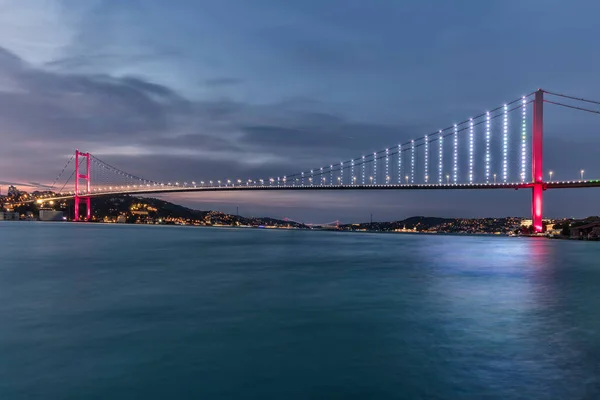
Bridges connect more than land—they link economies, cultures, and daily lives across vast waters. These structures often demand staggering investments due to complex engineering, harsh environments, and massive scales. This article ranks the priciest ones built, highlighting their costs, innovations, and impacts with fresh insights.
Hong Kong-Zhuhai-Macau Bridge Tops at $20 Billion
That colossal span, finished in 2018, holds the record as the costliest bridge complex ever. Stretching 55 kilometers with bridges, tunnels, and islands, it slashes travel time between Hong Kong, Zhuhai, and Macau from three hours to 45 minutes. Engineers faced typhoons and deep seas, using 400,000 tons of steel—30 times the Eiffel Tower’s amount.
The project united four governments, employing 34,000 workers over nine years. Daily, it handles 40,000 vehicles, boosting trade in the Pearl River Delta. Such feats show why this $20 billion investment redefined regional connectivity.
Danyang-Kunshan Grand Bridge: $8.5 Billion Rail Giant
Next in line, this 164.8-kilometer behemoth in China supports high-speed rail between Beijing and Shanghai. Opened in 2011, it carries trains at 350 km/h across lakes, rivers, and farms. Its length alone—nine times longer than the Burj Khalifa is tall—demanded precise viaduct tech to minimize sway.
Over 6,772 pillars uphold it, built amid floods and soft soil. Riders now zip the full rail line in under five hours, fueling China’s economic boom. This engineering triumph proves rail bridges can rival highways in efficiency.
San Francisco-Oakland Bay Bridge Replacement: $6.4 Billion Rebuild
After the 1989 Loma Prieta earthquake wrecked its eastern span, California replaced it with a $6.4 billion seismic marvel by 2013. The single-tower, self-anchored suspension design withstands 8.0-magnitude quakes and ship collisions. It spans 3.4 kilometers, easing commutes for 260,000 daily drivers.
Crews used 50,000 tons of steel and faced lawsuits that ballooned costs. Today, it stands as a model for retrofitting aging infrastructure. That resilience saved lives and billions in future repairs.
Great Belt Fixed Link: $4.4 Billion Danish Connector
Denmark’s 1998 link bridges Zealand and Funen over 18 kilometers, including the world’s second-longest suspension span at 1.6 kilometers. Adjusted for inflation, its price hits modern billions, blending bridges, tunnels, and an island hub.
It cut Copenhagen-Funen travel from an hour’s ferry to seven minutes, lifting GDP by 1.5% yearly. Harsh North Sea winters tested modular construction here. This project inspired Europe’s cross-water links.
Akashi Kaikyo: $4.3 Billion Wind-Resistant Wonder
Japan’s 1998 icon spans 3,911 meters, the longest central span globally at nearly 2 kilometers. Hurricane-force winds during construction pushed costs to $4.3 billion, requiring vibration-dampening cables.
It links Kobe and Awaji Island, handling 23,000 vehicles daily post-Kobe earthquake recovery. Engineers raised the roadway 65 meters mid-build after a quake shifted seabed. Such adaptability marks top-tier design.
Other Billion-Dollar Standouts Worth Noting
Several more push boundaries:
-
Øresund Bridge ($5.5 billion adjusted): Sweden-Denmark link since 2000, with rail and road over 16 kilometers.
-
Champlain Bridge ($3.4 billion, Canada): 2019 Montreal span for 65 million annual vehicles.
-
Kerch Strait Bridge ($3.7 billion, Russia): 19-kilometer Crimea connector opened 2018.
-
Evergreen Point Floating Bridge ($2.3 billion, USA): World’s longest floating span at 2.3 kilometers.
Why These Cost So Much: Real Factors
Extreme conditions like deep water or quakes inflate budgets by 50-100%. Labor, materials, and tech—such as anti-corrosion coatings—add up fast. Yet returns are huge: Hong Kong’s bridge alone generates $140 million yearly in tolls.
Future projects, like proposed Arctic spans, will test even higher limits. These icons remind us infrastructure shapes progress.
Also Read | Rebuild Trust in a Relationship: 8 Healing Steps

