



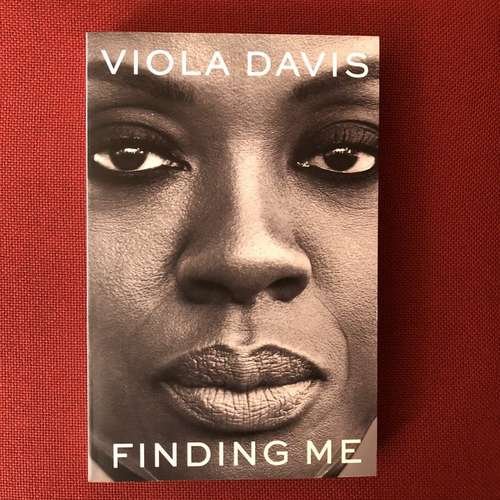
Few memoirs carry the weight of Viola Davis’ Finding Me. Published in April 2022, the book traces her path from a rat-infested apartment in Central Falls, Rhode Island, to the top of her profession, and it holds nothing back about the poverty, hunger, racism, and shame she survived along the way. Less than a year later, the audiobook she narrated herself won a Grammy, an award that completed her EGOT and made her the 18th person to win an Emmy, Grammy, Oscar and Tony.
That milestone turned a spotlight back on the book, but Finding Me was already resonating with readers for reasons that have nothing to do with trophies. It is honest in a way celebrity memoirs rarely are, and it offers something durable about self-worth and survival. Here is what the book is about and why it is worth your time.
Key Takeaways
- Finding Me: A Memoir is Viola Davis’ first book, published April 26, 2022, by HarperOne.
- The audiobook, narrated by Davis, won the Grammy for Best Audio Book, Narration and Storytelling Recording in February 2023.
- That Grammy completed Davis’ EGOT, making her the 18th person to win all four major awards.
- The memoir chronicles her rise from extreme poverty in Central Falls, Rhode Island, to a decorated stage and screen career.
- Its lasting value lies in its unflinching honesty about trauma, racism, forgiveness and reclaiming self-worth.
What Finding Me Is About
Finding Me is the story of how Viola Davis came to know and value herself. Born in 1965 in St. Matthews, South Carolina, she was raised largely in Central Falls, Rhode Island, where her family lived in deep poverty. The book describes a childhood marked by hunger, a crumbling and rat-infested apartment, bullying and racism, and the strain of domestic violence in her home. It is written with startling candor, including details many public figures would never share.
From there, the memoir follows her way out: a growing love of theater, training that took her to Rhode Island College and then Juilliard, and a career that led to Broadway, film and television. Davis has described the book as a way to honor her six-year-old self, and that framing runs through all 304 pages. It is less a standard rise-to-fame chronicle than a reckoning with the shame she carried and the self she eventually reclaimed. The audiobook, which runs roughly nine hours in her own voice, brings that intimacy even closer.
Why Finding Me Is Worth Reading

It is honest in a way most memoirs are not
The first reason to read Finding Me is its raw honesty. Davis writes about poverty and shame without softening the edges, describing experiences that many would keep private. That willingness to sit with the hardest parts of her story, rather than skip to the triumph, is what gives the book its power. Readers come away trusting the narrator, because she refuses to flatter herself or tidy up the truth.
It reframes shame and self-worth
At its core, the memoir is about the long work of separating your worth from your circumstances. Davis frames the entire book as a message to her younger self, the frightened girl who did not yet know she mattered. For readers wrestling with their own shame or self-doubt, that reframing is the book’s most valuable gift: the idea that the child you once were deserves honor, not erasure, and that self-worth can be reclaimed at any age.
It is a real story of resilience and reinvention
Davis’ arc from a poor neighborhood in Central Falls to the heights of her craft is a genuine account of resilience, not a motivational slogan. The book shows the effort, the setbacks, and the discipline behind the transformation, which makes it more useful than a simple success story. It demonstrates that reinvention is possible but rarely easy, and that persistence and preparation carry as much weight as talent.
It confronts racism and colorism directly
Finding Me does not shy away from race. Davis writes about the racism and bullying she faced as a child and about the narrow roles she was offered in Hollywood, having been repeatedly cast in parts that flattened Black women’s stories. She has been candid about her complicated feelings toward films built on those tropes. That honesty gives the book weight as a cultural document, not just a personal one, and helps readers understand the industry she had to push against.
It models forgiveness without excusing the past
One of the memoir’s most affecting threads is Davis’ evolving relationship with her father, who was a source of fear during her childhood but changed over time. The book holds space for both the harm and the eventual reconciliation, showing forgiveness as a complex process rather than a tidy resolution. The lesson is that you can acknowledge a painful past honestly and still find room for grace, without pretending the wounds never happened.
The audiobook is a singular experience
Finally, the Grammy-winning audiobook is worth seeking out on its own merits. Davis narrates her story herself, and the recording earned the award that completed her EGOT precisely because her delivery brings the text to life. Hearing her voice her own trauma, humor and hard-won peace adds a layer the page cannot fully replicate, which is why many readers recommend the audio edition even if they usually prefer print.
The Story Behind the Book
Viola Davis was already one of the most respected performers of her generation when Finding Me arrived. She won two Tony Awards for King Hedley II in 2001 and Fences in 2010, an Emmy in 2015 for How to Get Away with Murder, where she became the first Black woman to win Outstanding Lead Actress in a Drama Series, and an Academy Award in 2017 for the film version of Fences. The Grammy for Finding Me in February 2023 was the final piece of her EGOT.
Accepting that award, Davis returned to the book’s central purpose. She said she wrote it to honor the six-year-old Viola, adding that it had been such a journey before declaring, “I just EGOT!” She thanked her husband, actor Julius Tennon, and their daughter, Genesis, calling them the best chapter in her book. The moment underscored what makes the memoir resonate: it was never really about fame, but about a woman making peace with where she came from.

Should You Read or Listen to Finding Me?
If you value memoirs that are honest about hardship and generous with hard-won insight, Finding Me is well worth reading. Readers expecting a light celebrity tell-all should know that the book goes to difficult places, but that depth is exactly what has connected with so many people. Given the strength of the narration, the audiobook is an excellent choice and, by the measure of its Grammy, an award-winning one. Either format delivers the same core: a moving, clear-eyed story about survival, identity, and the courage it takes to find yourself.
Frequently Asked Questions
When was Finding Me by Viola Davis published?
Finding Me: A Memoir was published on April 26, 2022, by HarperOne.
What is Finding Me about?
It is Viola Davis’ memoir, tracing her life from extreme poverty in Central Falls, Rhode Island, through her training and career, and her journey toward self-worth and healing.
Did Finding Me win a Grammy?
Yes. The audiobook, narrated by Davis, won the Grammy for Best Audio Book, Narration and Storytelling Recording in February 2023.
How did Finding Me complete Viola Davis’ EGOT?
The Grammy for the audiobook gave Davis all four major awards, the Emmy, Grammy, Oscar, and Tony, making her the 18th person to achieve EGOT status.
Should I read or listen to Finding Me?
Both are strong, but many readers recommend the audiobook because Davis narrates it herself, and that recording is the version that won the Grammy.
What are the main themes of Finding Me?
Key themes include surviving poverty, confronting racism and shame, reclaiming self-worth, forgiveness, and defining your identity beyond your circumstances.
Also Read | Matthew McConaughey’s Greenlights: What the Book Can Teach You About Life

