



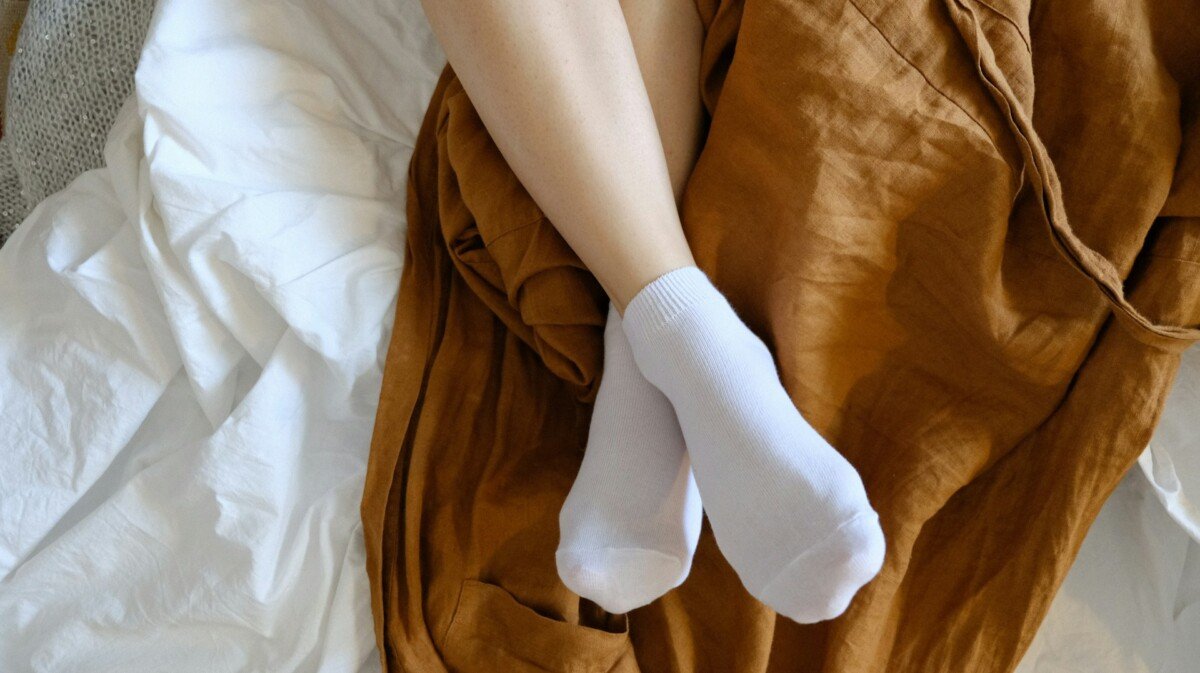
It sounds like an old wives’ tale, but there is real science behind it: for many people, slipping on a pair of socks before bed genuinely can help you drift off faster. The reason comes down to body temperature. Warming your feet widens the blood vessels in your skin, which releases heat and gently lowers your core temperature, and that small dip is one of the signals your body uses to know it is time to sleep.
It is not magic, and it does not work the same for everyone, but it is a cheap, cozy and low-risk trick worth understanding. Here is what the research shows, what sleep doctors actually say, who should be a little cautious, and how to do it right.
Key Takeaways
- Warming your feet triggers distal vasodilation, which helps lower your core body temperature and cue sleep.
- One study found that people who wore socks to bed fell asleep about 7.5 minutes faster and slept roughly 32 minutes longer.
- A Cleveland Clinic sleep specialist says socks can be an effective part of a good sleep routine.
- The studies are small, results vary from person to person, and socks are a sleep aid, not a cure for insomnia.
- Choose loose, breathable natural-fiber socks, skip tight compression socks, and check with your doctor if you have circulation problems.

The Science: Why Warm Feet Help You Sleep
Your body runs on an internal 24-hour clock, and part of how it prepares for sleep is by lowering your core temperature. As evening approaches and melatonin rises, your core temperature naturally begins to drop, and lower body temperatures tend to come just before sleepiness sets in.
Warming your feet speeds that process along. When your feet get warm, the blood vessels in the skin widen, a process called distal vasodilation, which increases blood flow to your hands and feet and lets heat escape from your body more quickly. As that heat leaves, your core temperature falls, essentially sending your brain the message that it is time to wind down. Socks are simply an easy way to kick-start that warm-feet, cool-core effect, which is why warm feet have been linked to a quicker transition into sleep.
What the Research Actually Shows
The evidence is encouraging, if still modest. One often-cited study found that people who wore socks to bed fell asleep about 7.5 minutes faster, slept around 32 minutes longer, and woke up less often during the night than those with bare feet. Other research points in the same direction: warming the feet for about 20 minutes before bed has been linked to fewer insomnia symptoms and less fatigue, and people with insomnia have slept better after warming their hands and feet. Warm wool socks and sleepwear, in particular, have been associated with falling asleep faster and waking less.
It is worth being honest about the limits, though. These studies are generally small, and several were done in young, healthy adults, so the exact numbers may not apply to everyone. In fact, one study of older adults with insomnia found no improvement from foot warming, suggesting age and individual differences matter. The takeaway is that this is a promising, low-risk habit rather than a guaranteed fix.
What Doctors Say
Sleep specialists tend to view the sock trick favorably, within reason. Aparna Bhat, MD, a sleep medicine specialist at Cleveland Clinic, says that wearing socks to bed “can be an effective part of a good sleep strategy.” That framing is key. Doctors position socks as one helpful piece of a healthy bedtime routine, not as a standalone cure.
In other words, socks work best alongside the other fundamentals of good sleep, like a consistent schedule, a cool and dark bedroom, and limited screens before bed. If cold feet are keeping you tossing and turning, warming them is a sensible and doctor-endorsed thing to try. If your sleep problems run deeper, socks alone are unlikely to solve them.
The Other Perks of Sleeping in Socks
Beyond helping you nod off, a bedtime pair of socks offers a few bonus benefits. For people with Raynaud’s syndrome, whose hands and feet get very cold as blood vessels narrow, socks can promote blood flow and keep the feet comfortably warm through the night.
They may also help during menopause. By helping keep body temperature a little steadier, socks might reduce the odds of hot flashes disrupting your sleep, a welcome perk for women in midlife. And there is a skincare angle too: smoothing on a moisturizer and then covering your feet with socks can help soften cracked heels and dry skin overnight. For people with diabetes or peripheral arterial disease, soft socks may also reduce the rubbing that can lead to foot irritation, though this group should always follow their clinician’s specific advice.
Who Should Be Cautious
Socks at bedtime are safe for most people, but a few should take care. If you have circulation problems, swelling in your feet, diabetes or peripheral arterial disease, it is worth checking with your doctor first and making sure any socks you wear are not tight enough to restrict blood flow.
One clear rule from the experts: do not sleep in compression socks unless a medical professional has specifically told you to. Compression socks are designed to squeeze the legs to move blood during the day, and wearing them overnight without guidance can do more harm than good. When in doubt, choose loose and comfortable, and ask your clinician.
How To Do It Right: The Best Socks and Simple Tips
If you want to give it a try, a few small choices make the habit more effective and more hygienic. Reach for loose, breathable socks made from natural fibers such as cotton, merino wool, cashmere or bamboo, which keep feet warm without trapping moisture. Avoid synthetic materials like polyester, which are less breathable, and steer clear of anything tight.
A few more pointers help. Put on a fresh, clean pair each night and wash your feet regularly, since warm, covered feet can otherwise encourage bacteria. If you like, moisturize your feet before slipping the socks on for a skincare boost. And remember that socks are just one way to warm your feet: a warm foot bath or a brief foot massage before bed works on the same principle. Pair all of this with a cool bedroom, ideally around 65 to 70 degrees Fahrenheit, so your warm feet and cool room work together.
What the Evidence Does NOT Prove
A few honest clarifications keep expectations in check. The research does not prove that socks will knock you out instantly or work for every single person. The studies behind the sock effect are small and often involve young, healthy adults, and at least one study in older people with insomnia found no benefit, so results genuinely vary.
Socks also are not a treatment for insomnia or any sleep disorder. They are a gentle, supportive habit that may nudge you toward sleep a little faster, not a substitute for addressing the real causes of poor sleep. And some people simply run warm at night and find socks uncomfortable or overheating, in which case there is no reason to force it. Think of this as a low-cost experiment: try it for a week or two and see how your own body responds.
When To See a Doctor
A pair of socks is no replacement for medical care when sleep problems persist. If you regularly struggle to fall or stay asleep, feel exhausted during the day despite enough time in bed, or your sleep troubles are affecting your mood, work or safety, it is worth talking to a doctor, who can look for underlying causes such as insomnia, sleep apnea or other conditions.
Also check in with your healthcare provider before making foot warming a habit if you have diabetes, poor circulation, peripheral arterial disease or persistent swelling in your feet and legs. Getting the right guidance ensures a cozy habit stays a healthy one.
The Bottom Line
Sleeping with socks on really can help many people fall asleep faster, and the reason is sound: warming your feet widens blood vessels, releases heat, and lowers your core temperature, which is exactly the cue your body waits for before sleep. One study found sock wearers fell asleep about 7.5 minutes faster and slept longer, and sleep doctors consider it a reasonable part of a good bedtime routine.
Just keep your expectations realistic. The science is promising but based on small studies; socks are a helper rather than a cure, and comfort is personal. Choose loose, natural-fiber socks, keep your bedroom cool, and if cold feet have been stealing your sleep, this simple, inexpensive trick is well worth a try tonight.
Also Read | Muscle Loss on Semaglutide: The Facts and How To Prevent It

