



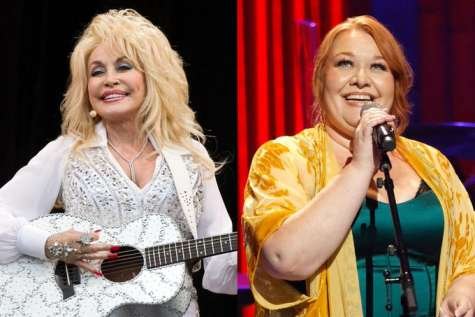
Dolly Parton‘s niece, singer Jada Star, told Extra in an interview shared September 1, 2026, that the family kept Parton’s cancer diagnosis private because “she never wanted to worry anybody.” Star, the daughter of Parton’s younger sister Freida, said the death on August 25 was still “a shock” even to those closest to Dolly, and described the past week as “really difficult and very surreal.” Four days after her aunt’s passing, Star took the stage at the Grand Ole Opry and performed “The Orchard,” a song she had recorded with Dolly for the 2024 Parton family album, in what became the most emotional moment of an evening dedicated to the country legend’s memory.
“She Never Wanted to Worry Anybody”
When the rest of the world learned on August 25, 2026, that Dolly Parton had died of cancer at age 80, the reaction was universal shock. Not just because a cultural icon was gone, but because nobody outside her closest circle had known she was sick.
For months, Parton had attributed her health challenges to kidney stones, immune system problems, and the toll of grief after her husband Carl Dean’s death in March 2025. She had postponed her Las Vegas residency, missed Dollywood events, and told fans she needed time to rebuild herself physically. She never mentioned cancer.
In her first public interview since Parton’s death, Jada Star explained why.
“We kind of kept all that stuff real private,” Star said in her September 1 interview with Extra. “She never wanted to worry anybody. So I think it was just a shock on Tuesday.”
While the family was aware of Dolly’s health struggles and cancer diagnosis, Star admitted the singer’s death still came as a “shock.”
The 47-year-old Star, whose given name is Jada Andersen, is the daughter of Freida Parton, one of Dolly’s five sisters among her 11 siblings. She is herself a singer and songwriter who has carried forward the family’s musical tradition.

“I Can’t Remember a Life Without Her”
Star described the week following Parton’s death as “really difficult and very surreal. I think we all share that feeling.”
The grief, she said, was tempered by something she had not fully anticipated: the scale of the world’s response.
“It’s also been really bittersweet because of this beautiful opportunity we’ve had to see how much the whole world loves her,” Star said. “All of these tributes have helped so much to help us all through it.”
Among those tributes: a memorial at Dollywood in Pigeon Forge, Tennessee, where fans left flowers, candles, and handwritten notes. New York City’s Empire State Building lit up in pink sparkle. Memorials appeared in Nashville, Sevierville, and cities across the country. Radio stations played her music in continuous rotation. World leaders, entertainers, and ordinary fans shared their memories.
Through it all, Star kept returning to a theme that sounded less like grief and more like instructions from Dolly herself.
“I can’t remember a life without her in it,” Star said. “She would also tell us to start drying it up and start trying to get back to work and love each other real hard. She was just a trip.”
The Grand Ole Opry Tribute: “We’re All Going to Be Alright”
Four days after Parton’s death, Star did exactly what her aunt would have told her to do: she went back to work.
On Saturday, August 29, the Grand Ole Opry dedicated its already-scheduled evening show to Dolly Parton’s memory. The most sentimental moment came from Parton’s niece Jada Star, who performed her original song “The Orchard” from the Parton family’s 2024 album, “Smoky Mountain DNA: Family, Faith and Fables.”
The performance carried particular weight. Star had written “The Orchard,” and she and Dolly had recorded it together for the family album, meaning the song was not a tribute composed after the fact. It was a piece the two had already shared as family, now performed without the voice that had harmonized beside hers.
Earlier that day, Star had posted on Facebook: “I have been asked to sing my song ‘The Orchard’ tonight as part of the Grand Ole Opry’s tribute to my incredible aunt, Dolly Parton. I am walking around in a fog of sadness, like all of you have. I do not take this honor lightly. I will stand on that stage tonight, the stage she loved so much, and share my song I wrote for her and for my whole family.”
After her performance, Star became emotional as she spoke to her family and the audience. She told the crowd her family had “seen your tributes” and wanted to say thank you.
“We couldn’t share Dolly with you any more than you could share the moon or sun with someone,” she said.
She closed with six words that broke through the grief: “We’re all going to be alright. I promise.”
An Evening of Music on the Stage She Loved
The Grand Ole Opry used songs associated with Dolly Parton’s career to trace her journey from a teenage performer on its stage to one of country music’s defining songwriters.
The tribute featured performances by some of Nashville’s most respected artists:
- Carly Pearce led several performances and helped organize the evening’s structure
- Kathy Mattea performed Parton classics tied to her Appalachian roots
- Ketch Secor and Molly Tuttle teamed up on “Just Someone I Used to Know”
- Dan Tyminski introduced “Smile When You’re Alone,” noting Parton’s voice “would have been perfect on it”
- T. Graham Brown sang “Beulah Land”
- Channing Wilson performed “My Tennessee Mountain Home”
- Belle Frantz made her Opry debut with the gospel standard “Where No One Stands Alone”
At the end of the show, a video of Parton singing “I Will Always Love You,” from one of her past Opry performances, played as performers and backstage guests watched from on stage.
The finale brought the evening full circle. Carly Pearce invited the crowd to sing “9 to 5,” and Jelly Roll, who had shared an emotional tribute to Parton on social media after her death, made a surprise appearance on stage as the Nashville native and the crowd sang together.
Despite the expectation of tears and grief, the mood was light throughout, consistent with the spirit of a woman who spent her life insisting that hard times were best met with music, laughter, and work.

A Family That Grieved Privately While the World Mourned Publicly
The Parton family’s decision to keep Dolly’s cancer diagnosis private reflects a pattern that Dolly established throughout her life: radical openness about her story on her own terms, and firm boundaries around what she was not ready to share.
She talked about growing up in poverty. She talked about her hysterectomy. She talked about the time she considered ending her life. She talked about her kidney stones, her exhaustion, and her grief after Carl’s death. She did not talk about cancer.
Star’s explanation was simple: Dolly did not want the people who loved her to carry the weight of her illness.
That choice is not uncommon among public figures or private individuals who receive a serious diagnosis. The motivations are often the same: a desire to maintain normalcy, to avoid being redefined by illness, to protect loved ones from anticipatory grief, and to retain control over the narrative of one’s own life.
For Dolly Parton, who had spent 67 years in the public eye since her first appearance on the Cas Walker Show at age 10, the decision to keep cancer private may have been the most private act of a profoundly public life.
“Thank You So Much. I Love You So Much.”
When Extra’s Mona Kosar Abdi asked Star whether there was anything she would have wanted to say to Dolly, the answer came through tears.
I think I would just say thank you so much and I love you so much and I know you’re okay.
Star also reflected on what she felt during her Grand Ole Opry performance. “I just thought of that when I was out there,” she explained, noting she could feel her aunt’s light “everywhere” during the performance.
Other Family Tributes
Star was not the only family member to honor Parton publicly in the days following her death.
Freida Parton (Dolly’s younger sister and Jada Star’s mother) shared insight into the bond they shared. “Every Tuesday about this time, before the sun came up and the world was still asleep, she and I, for many years, had our coffee together over the phone,” she wrote on social media. “Being little farm girls, we’ve continued to be early risers.” She added: “As she liked to say: ‘Shoot Tedda, we get more work done before the sun comes up than most folks do all day long!'”
Heidi Parton (the daughter of Dolly’s brother Randy Parton) performed a rendition of “Burning” on Instagram on August 29, calling it “a little bit of tribute” to her beloved aunt.
Bryan Seaver (Dolly’s nephew) delivered the video announcement of her death on Parton’s Instagram page. His words at her private memorial became one of the most repeated quotes of the week: “Dolly was a farmer, just like her daddy. He farmed the soil, she farmed songs and happiness.”
Why Some People Choose to Keep a Cancer Diagnosis Private
Dolly Parton’s decision to keep her cancer from the public is shared by many individuals facing serious illness. Research from the American Cancer Society and clinical psychology literature identifies several common reasons:
- Maintaining control over identity. Many cancer patients do not want their condition to become the first thing others think about when they see them. Parton, who was known for joy, generosity, and music, may not have wanted “cancer patient” added to that identity.
- Protecting others from worry. Star’s explanation, “she never wanted to worry anybody,” is one of the most frequently cited reasons in patient surveys. The concern is especially strong among people who are aware of how many others depend on them emotionally.
- Preserving normalcy. Once a diagnosis becomes public, interactions change. Conversations become about illness. Plans become tentative. Some patients prefer to continue living as normally as possible for as long as possible.
- Avoiding unsolicited advice. Public disclosure often brings a flood of well-meaning but unwanted recommendations, from dietary cures to alternative therapies.
- Privacy as self-determination. For public figures, medical privacy may be one of the few boundaries they can fully control.
There is no “right” answer about whether to disclose a diagnosis. Each person weighs their own relationships, responsibilities, and emotional needs. What matters, and what Star’s interview makes clear, is that Dolly made the choice deliberately and her family honored it.
Dolly Parton’s niece Jada Star opens up about the country icon’s final days: “It was just a shock.” 💔 pic.twitter.com/j7l1dT6B0f
— ExtraTV (@extratv) September 1, 2026
Key Takeaways
- Dolly Parton’s niece Jada Star told Extra on September 1, 2026, that the family kept Parton’s cancer diagnosis private because “she never wanted to worry anybody.”
- Star described her aunt’s death on August 25 as “a shock” even to those close to her, and called the week since her passing “really difficult and very surreal.”
- Four days after Parton’s death, Star performed “The Orchard” at the Grand Ole Opry’s tribute to her aunt, a song the two had recorded together for the 2024 Parton family album “Smoky Mountain DNA.”
- Star told the Opry audience: “We couldn’t share Dolly with you any more than you could share the moon or sun with someone.”
- The tribute evening featured Carly Pearce, Kathy Mattea, Molly Tuttle, Dan Tyminski, Jelly Roll, and others, closing with a communal sing-along of “9 to 5” and a video of Parton performing “I Will Always Love You.”
- Star said Dolly “would also tell us to start drying it up and start trying to get back to work and love each other real hard.”
In Her Own Way, on Her Own Terms
Dolly Parton spent 80 years telling her story exactly the way she wanted to tell it. She decided what the public knew and when they knew it. She shaped her image, her narrative, and her legacy with a precision that few public figures have ever matched.
Her decision to keep cancer private was the final act of that self-determination. Not out of shame. Not out of denial. Out of the same instinct that defined her entire life: to protect the people she loved from pain she could carry alone.
“She never wanted to worry anybody.”
In the end, she worried everyone. But she did it on her own timeline, which was the point all along.
Human fact-check required before publication. All facts sourced from verified news outlets. Re-verify against the latest reporting before publication.
If you found this article meaningful, share it with someone who loved Dolly. You can also sign up for our newsletter for more health and wellness content delivered to your inbox.

