



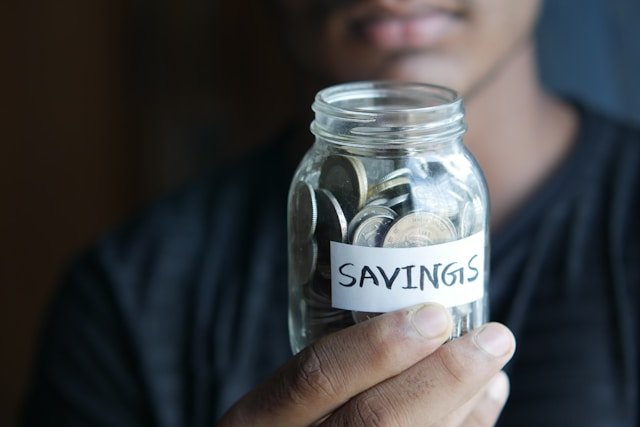
You can build an emergency fund on a low income. It will be slower than the advice written for higher earners suggests, and the standard “save three to six months of expenses” target is not where you start. It is where you eventually arrive.
The approach that works on a tight budget is different in three ways. You start with a small, specific target instead of a scary large one. You automate a tiny amount so the decision only happens once. And you protect the fund from everyday spending so it is there when the actual emergency comes.
Here is what this guide covers:
- Why a small buffer matters even more when money is tight
- A realistic first target, and how long small amounts actually take
- Where to keep the money and how to protect it
- How to find savings when there is “nothing left,” and what to do when the fund is not enough yet

Why This Matters More When Money Is Tight
There is a cruel irony in personal finance: the people who most need an emergency fund are the ones told they cannot afford one.
The data shows how common the gap is. In the Federal Reserve’s 2025 household survey, 63% of adults said they could cover a hypothetical $400 emergency using cash or its equivalent, which means more than a third could not (Federal Reserve, 2026). The strain concentrates at lower incomes: among adults earning less than $50,000, four in ten said they could not cover even a $100 emergency expense using only their savings (Federal Reserve, 2026).
Without a buffer, every surprise becomes debt. A car repair goes on a credit card averaging over 22% interest. A missed shift turns into a late fee, which turns into a bigger bill. The absence of a small cushion is expensive in a way that compounds.
This is exactly why a modest emergency fund is not a luxury to build “later.” For someone on a low income, it is the single change that stops small shocks from turning into long-term debt. The Consumer Financial Protection Bureau made this the centre of its Start Small, Save Up work, which is built on a simple finding: the habit of saving matters more than the amount (Consumer Financial Protection Bureau, 2020).
What an Emergency Fund Actually Is
An emergency fund is money set aside only for genuine, unexpected, necessary expenses. Three words carry the definition.
- Unexpected: you did not plan for it. Rent is not an emergency; a burst pipe is.
- Necessary: not having it fixed causes real harm. A sale is not an emergency.
- Urgent: it cannot wait for next payday without consequences.
A useful test before spending from it: is this unexpected, necessary, and urgent? If it fails any one of the three, it is not an emergency, and the money stays put.
Common real emergencies include a car repair you need to get to work, an essential appliance breaking, an unavoidable medical or dental cost, an emergency trip, or covering essentials during a gap in income.
Forget Three to Six Months, For Now
Most articles open with “save three to six months of expenses.” On a low income, that number is not motivating. It is paralysing.
The Consumer Financial Protection Bureau documented exactly this problem. Half of consumers believed they needed $10,000 or more for an emergency, while more than half reported having $3,000 or less across their savings and checking accounts combined (Consumer Financial Protection Bureau, 2020). When the target feels impossible, people do not start.
So use milestones instead of one distant finish line.
| Milestone | Target | Why this level |
|---|---|---|
| Starter buffer | $500 | Covers many common car and appliance repairs. This is the one that changes daily stress |
| One month | One month of essentials | Turns “I must borrow today” into breathing room |
| Full fund | 3 months of essentials | The longer-term goal, reached over years, not months |
Reaching the first $500 is the milestone that matters most, because it is the one that stops the majority of small emergencies from becoming debt. Everything after that is building on a foundation that already works.
For context, in 2025 only 55% of U.S. adults said they had savings to cover three months of expenses (Federal Reserve, 2026). Reaching even the starter buffer already puts you ahead of a large share of households, including many who earn far more than you.
How Long Small Amounts Really Take
Tiny amounts feel pointless. They are not. Here is what it actually takes to reach the $500 starter buffer, assuming the money sits in a basic savings account:
| You save | Time to reach $500 |
|---|---|
| $10 per month | About 4 years |
| $25 per month | About 20 months |
| $50 per month | About 10 months |
| $100 per month | About 5 months |
Even the slowest line gets there. And most people can move faster than they expect once the saving is automatic and protected.
Small daily or weekly amounts add up more than they feel like they should:
- $1 a day is about $365 a year
- $2 a day is about $730 a year
- $5 a week is about $260 a year
None of these will feel like wealth-building. That is fine. The starter fund is not an investment. It is a shock absorber, and a small one still absorbs shocks.
Where to Keep Your Emergency Fund
The account matters, because the wrong one either loses value or gets spent.
Good homes for an emergency fund share three traits:
- Separate from your everyday spending account, so you do not see it as available
- Accessible within a day or two, so you can reach it in a real emergency
- Safe, meaning the balance does not fall in value
A basic savings account at a bank or credit union works. Where available, a high-yield savings account pays more interest for the same access, though the interest is a bonus rather than the point at these balances. Many countries and regions offer credit unions or community banks with low or no minimum balances, which suits a small starter fund well.
Poor homes for an emergency fund: your current or checking account, where it blends into spending; investments that can fall in value exactly when you need to withdraw; and anything with a withdrawal penalty or a multi-day delay. Cash at home is a last resort, since it is easy to spend and easy to lose.
One practical rule: no linked debit card on the savings account. A small amount of friction is a feature. It gives you a pause before spending.
The Method That Works on a Tight Budget
Step 1: Pick your first number
Not three months. Pick $500, or if that feels far off, pick $100 first. A target you can picture is a target you will pursue.
Step 2: Automate a small transfer
Set up an automatic transfer from your main account to your separate savings account for the day after you get paid. Start with an amount so small you will barely notice it, even $10 or $20. Automation matters because it removes the monthly decision, and the decision is where saving usually fails.
The evidence for automation is strong. When saving is automatic and tied to income, people save far more reliably than when they have to choose to move money each time.
Step 3: Protect it with a simple rule
Decide in advance what counts as an emergency, using the unexpected-necessary-urgent test above. Write it down. The rule protects the fund from the slow leak of “just this once.”
Step 4: Refill after you use it
Using the fund is not failure. That is its job. The only rule is that when you spend from it, restarting the transfer becomes your next priority, ahead of any non-essential spending.
Step 5: Increase it painlessly
Every time income rises, a shift picks up, a subscription is cancelled, or a debt is paid off, send part of that freed-up money to the fund. You never miss money you never got used to spending.
Finding Money When There Is “Nothing Left”
On a low income, the honest answer is that some months there genuinely is nothing spare, and no article should pretend otherwise. But for many people, small amounts can be found without real sacrifice. A few places to look:
- Subscriptions and memberships you forgot you had. Audit every recurring charge once. Cancel what you do not use.
- Bank fees and overdraft charges. These are often avoidable by switching to a free account or a credit union. That saved fee can become your first automatic transfer.
- One recurring small purchase swapped or dropped. Not all of them, which is unrealistic, but one.
- Windfalls treated as savings, not bonuses. A tax refund, a rebate, a gift, or back pay. Routing even part of a windfall to the fund can build the starter buffer in one move.
- Selling items you no longer use. A one-off boost to reach the first milestone faster.
- Round-ups. Some banks round card purchases to the nearest unit and save the difference. Small transactions can quietly add a few hundred a year.
- Government and community support. Depending on where you live, benefits, tax credits, hardship funds, or local programmes may free up cash or match savings. Checking eligibility costs nothing.
The goal is not to find one large sum. It is to find one small, repeatable amount you can automate.
Common Mistakes to Avoid
- Waiting until you can “afford to save properly” before starting at all
- Setting the target so high it feels hopeless
- Keeping the fund in your everyday account, where it gets spent by accident
- Investing your emergency fund and watching it drop right when you need it
- Raiding it for non-emergencies, then feeling defeated and stopping
- Using a credit card as your only backup plan, which converts a shock into high-interest debt
- Trying to build a full three-month fund and a debt payoff and investments all at once
- Never refilling it after a genuine emergency
Emergency Fund Myths vs Facts
| Myth | What is actually true |
|---|---|
| “You need a high income to save.” | The saving habit predicts financial stability more than income does. Self-described savers were about three times less likely to struggle with bills, a pattern that held within income groups (Consumer Financial Protection Bureau, 2020) |
| “Small amounts are not worth it.” | $500 covers many common emergencies and is the milestone that most reduces day-to-day stress |
| “I should invest my emergency fund for growth.” | Emergency funds must be safe and accessible. Investments can fall in value exactly when you need to withdraw |
| “A credit card is my emergency fund.” | A credit card is borrowing at high interest. It can supplement a plan but is not a substitute for cash |
| “I’ll start when things calm down.” | For most tight budgets, things rarely calm down on their own. Automating a tiny amount now beats waiting |
| “Three months of expenses is the starting point.” | It is the eventual goal. The starting point is $100 to $500 |
Two Realistic Examples
Case study: Grace, single parent, irregular hours Grace felt she could never save because some months were tight. She stopped aiming for three months of expenses and aimed for $500. She set a $15 automatic transfer for the day after payday and moved her account to a credit union with no monthly fee, which freed up a few more units each month. In some months she paused the transfer; in better months she added a little extra and routed part of her tax refund to the fund. Fourteen months later she had her $500, and when her car needed a repair, she paid cash instead of using a card. Nothing about her income changed. The system did.
Case study: Daniel, low wage, no slack Daniel genuinely had no spare money most months. Rather than force a transfer he could not sustain, he did two things: he cancelled two forgotten subscriptions, and he treated every windfall as savings. A rebate, some overtime, and a birthday gift went straight to a separate account he could not easily touch. It was slow and uneven, but within a year he had a small buffer that had not existed before. His plan was not elegant. It worked anyway.
These are illustrative composites, not real individuals.
When the Fund Is Not Enough Yet: Handling an Emergency Before You’re Ready
Emergencies do not wait for your fund to be ready. If one hits before you have saved enough, the goal is to handle it in the least damaging order:
- Use whatever emergency savings you do have first, even if it does not cover the full cost.
- Ask about payment plans. Many medical providers, utilities, and repair services offer instalment options with low or no interest. It costs nothing to ask.
- Check hardship programmes. Utilities, lenders, and local charities often have hardship funds or deferral options, especially for essentials.
- Prioritise essentials if you cannot cover everything: housing, utilities, food, and the transport or tools you need to keep earning come first.
- Use lower-cost credit before high-cost credit. A credit card, though expensive, is almost always cheaper than a payday loan or similar short-term high-cost product, which can trap borrowers in repeat borrowing.
- Rebuild afterwards. Once the crisis passes, restart the small automatic transfer as your first priority.
If you are struggling with debt as well, free non-profit credit counselling is available in many countries and can help you build a realistic plan at no cost. This is general information, not advice for your specific situation.
Your 30-Day Starter Plan
Week 1: Set up the structure
- Open a separate savings account, ideally fee-free, with no linked debit card
- Pick your first target: $500, or $100 if that feels more reachable
- Write down your personal definition of an emergency
Week 2: Find the first small amount
- Audit every subscription and recurring charge; cancel one
- Check whether you are paying avoidable bank or overdraft fees
- Identify one small, repeatable amount you can spare, even $10
Week 3: Automate
- Set an automatic transfer for the day after payday
- Route any windfall this month to the fund instead of spending it
- Sign up for round-ups if your bank offers them
Week 4: Protect and plan
- Confirm the fund is separate and not easily spent
- Check your eligibility for any local support, benefits, or savings-match programmes
- Set a reminder to increase the transfer the next time income rises
Expert Tips
- Automate the smallest amount you won’t miss, then increase it later. The habit matters more than the size.
- Name the account “Emergencies” so its purpose is obvious every time you see it.
- Add friction. No debit card on the savings account. The small delay protects the fund.
- Treat windfalls as savings by default, deciding in advance rather than in the moment.
- Celebrate the first $500. It is the milestone that changes daily stress the most.
- Refilling is not restarting from zero. Using the fund correctly is a success, not a failure.
- Get local guidance on support programmes, since benefits and savings-match schemes vary widely by country and region.
Frequently Asked Questions
1. How much should I have in an emergency fund on a low income?
Start with a reachable target rather than the standard three-to-six-month figure. Aim first for $500, which covers many common emergencies, then build toward one month of essential expenses, and eventually three months. The starter buffer is the milestone that most reduces day-to-day financial stress, and reaching it already puts you ahead of many higher earners.
2. How can I save when I have no money left at the end of the month?
Look for one small, repeatable amount rather than a large sum: a cancelled subscription, an avoided bank fee, or round-ups on card purchases. Automate that amount for the day after payday so the decision only happens once. In genuinely tight months, treat windfalls such as a tax refund or extra shift as automatic savings instead of forcing a transfer you cannot sustain.
3. Where should I keep my emergency fund?
Somewhere separate, safe, and accessible within a day or two. A basic or high-yield savings account at a bank or credit union works well, ideally with no monthly fee and no linked debit card. Avoid your everyday account, where the money blends into spending, and avoid investments, which can fall in value exactly when you need to withdraw.
4. Should I pay off debt or build an emergency fund first?
A common approach is to build a small starter buffer of around $500 first, then focus on high-interest debt, then return to growing the fund. Without any buffer, the next surprise goes straight onto a credit card and undoes your debt progress. If your debt is severe, free non-profit credit counselling can help you balance the two. This is general information, not advice for your circumstances.
5. Is it really worth saving such small amounts?
Yes. A $500 buffer covers many car and appliance repairs, which are among the most common emergencies, and it stops those shocks from becoming high-interest debt. The saving habit itself is strongly linked to financial stability: people who save are far less likely to struggle paying bills, even at similar income levels (Consumer Financial Protection Bureau, 2020).
Key Takeaways
- Start small. A $500 starter buffer, or even $100, beats an impossible three-month target you never begin.
- Automate a tiny amount for the day after payday so the decision happens once.
- Keep it separate and safe. A fee-free savings account with no linked debit card, not your everyday account and not investments.
- The habit beats the amount. Savers are roughly three times less likely to struggle with bills, within income groups (Consumer Financial Protection Bureau, 2020).
- Most emergencies are small. More than a third of adults could not cover a $400 surprise with cash (Federal Reserve, 2026).
- You’re closer to the pack than you think. Only 55% of adults have three months saved (Federal Reserve, 2026).
- Using the fund is success, not failure. Refill it and continue.
Conclusion
Building an emergency fund on a low income is slower and harder than the standard advice admits, and pretending otherwise helps no one. But slower is not the same as impossible. The people who succeed are not the ones who found a spare $5,000. They are the ones who picked a small target, automated a tiny transfer, protected it from everyday spending, and refused to quit when a real emergency drew the fund down.
Pick your first number today. Open the separate account this week. Automate the smallest amount you will not miss. The first $500 will not make you wealthy, but it will change how the next unexpected bill feels, and that change is the whole point.
References
Consumer Financial Protection Bureau. (2020). Perceived financial preparedness, saving habits, and financial security. https://files.consumerfinance.gov/f/documents/cfpb_perceived-financial-preparedness-saving-habits-and-financial-security_2020-09.pdf
Federal Reserve. (2026). Report on the economic well-being of U.S. households in 2025: Savings and investments. Board of Governors of the Federal Reserve System. https://www.federalreserve.gov/publications/2026-economic-well-being-of-us-households-in-2025-savings-investments.htm

