



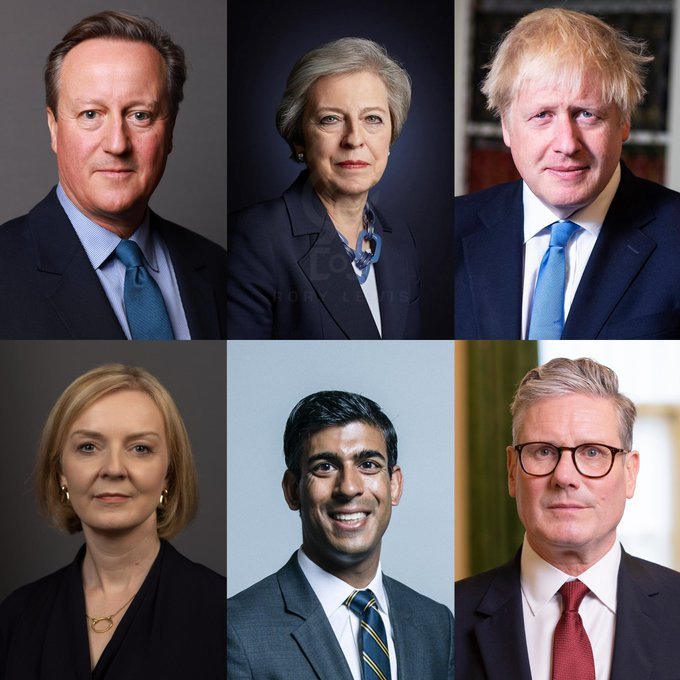
The past decade of British politics has seen a whirlwind of Prime Ministers, with leadership changes ranging from record-breaking stability to historic brevity. From David Cameron’s Brexit-defining era to Liz Truss’s astonishing 49-day stint, the role at Number 10 Downing Street has proven both glamorous and perilous. Let’s break down exactly how long each Prime Minister since 2015 served and what their tenure meant for the nation.
David Cameron: The Brexit Prime Minister Who Left After 2,060 Days
David Cameron served as Prime Minister from May 2010 to July 2016, holding power for approximately 2,060 days (about 5.6 years). His tenure ended when he resigned following the 2016 EU referendum result, where 52% of voters chose to leave the European Union. Cameron had campaigned strongly for remaining in the EU, and his political career collapsed overnight when the results came in.
This moment changed British politics forever. This decision triggered a cascade of leadership changes that would reshape the Conservative Party for years.
Theresa May: 1,106 Days of Brexit Negotiation Struggles
Theresa May took office in July 2016 after Cameron’s resignation and served for 1,106 days (roughly 3 years and 2 months). Her entire tenure was dominated by the impossible task of negotiating Brexit while maintaining party unity. May proposed three different Brexit deals, all rejected by Parliament, leading to her eventual resignation in May 2019.
May’s struggle illustrates how divisive Brexit became. She famously said, “Brexit means Brexit,” but couldn’t make it work politically.
Boris Johnson: 1,140 Days Including Historic Election Victory
Boris Johnson served from July 2019 to September 2022, totaling 1,140 days (about 3 years and 2 months). Johnson won a massive parliamentary majority in the December 2019 election with his “Get Brexit Done” campaign. He successfully delivered Brexit in January 2020 but faced multiple scandals, including the Partygate controversy and the resignation of dozens of ministers in July 2022, forcing his exit.
His tenure included both historic achievement and spectacular political collapse.
Liz Truss: The Record-Brief 49-Day Prime Minister
Liz Truss holds the record for the shortest-serving Prime Minister in British history, lasting only 49 days from September 10 to October 20, 2022. Her micro-economy plan, featuring unfunded tax cuts, triggered a financial market crisis. The pound plummeted, bond yields soared, and her own party abandoned her. Truss resigned after just seven weeks, becoming a symbol of political instability.
This brief tenure shattered expectations about how long any leader could survive.
Rishi Sunak: 619 Days of Crisis Management
Rishi Sunak served from October 2022 to July 2024, holding power for 619 days (about 1 year and 9 months). Sunak took over during multiple crises: the cost-of-living crisis, post-Truss economic instability, and the_CHIPPP_ scandal. He lost the July 2024 general election to Keir Starmer’s Labour Party after winning only 121 seats.
Sunak’s tenure showed how quickly political fortunes can change in modern Britain.
Keir Starmer: 717 Days So Far as Current Prime Minister
Keir Starmer became Prime Minister on July 5, 2024, and has served 717 days as of June 22, 2026 (approximately 2 years and 1 month). Starmer led Labour to a landslide victory with over 400 seats, the party’s biggest win since 2001. He is currently serving and has not resigned. His tenure focuses on economic recovery, NHS reform, and stabilizing British politics after years of turmoil.
Starmer represents a return to political stability after the chaotic post-2016 era.
Quick Comparison: Tenure Lengths at Number 10
Why Have So Many Prime Ministers Failed Recently?
The pattern is striking: since 2016, five Prime Ministers have left office, with four resigning and one losing an election. Brexit remains the central factor. Cameron resigned after losing the referendum. May couldn’t deliver it. Johnson delivered it, but collapsed under scandal. Truss and Sunak inherited the aftermath.
Political instability, economic crises, and party divisions have made the role increasingly dangerous. Liz Truss’s 49-day tenure proves that even having party support isn’t enough when markets revolt.
What Does This Mean for British Politics Going Forward?
Keir Starmer’s relatively stable tenure suggests Labour may have broken the cycle. With a massive parliamentary majority and public desire for stability after years of chaos, Starmer faces fewer immediate threats than his predecessors. However, the underlying issues, economic weakness, NHS struggles, and regional inequality, remain unsolved.
The rapid succession of Prime Ministers since 2015 shows how modern British politics has become increasingly unstable. Only Cameron served more than five years, and that was before the Brexit earthquake changed everything.
Also Read | Andy Burnham Sworn In as Makerfield MP – Labour Leadership Race Begins

