



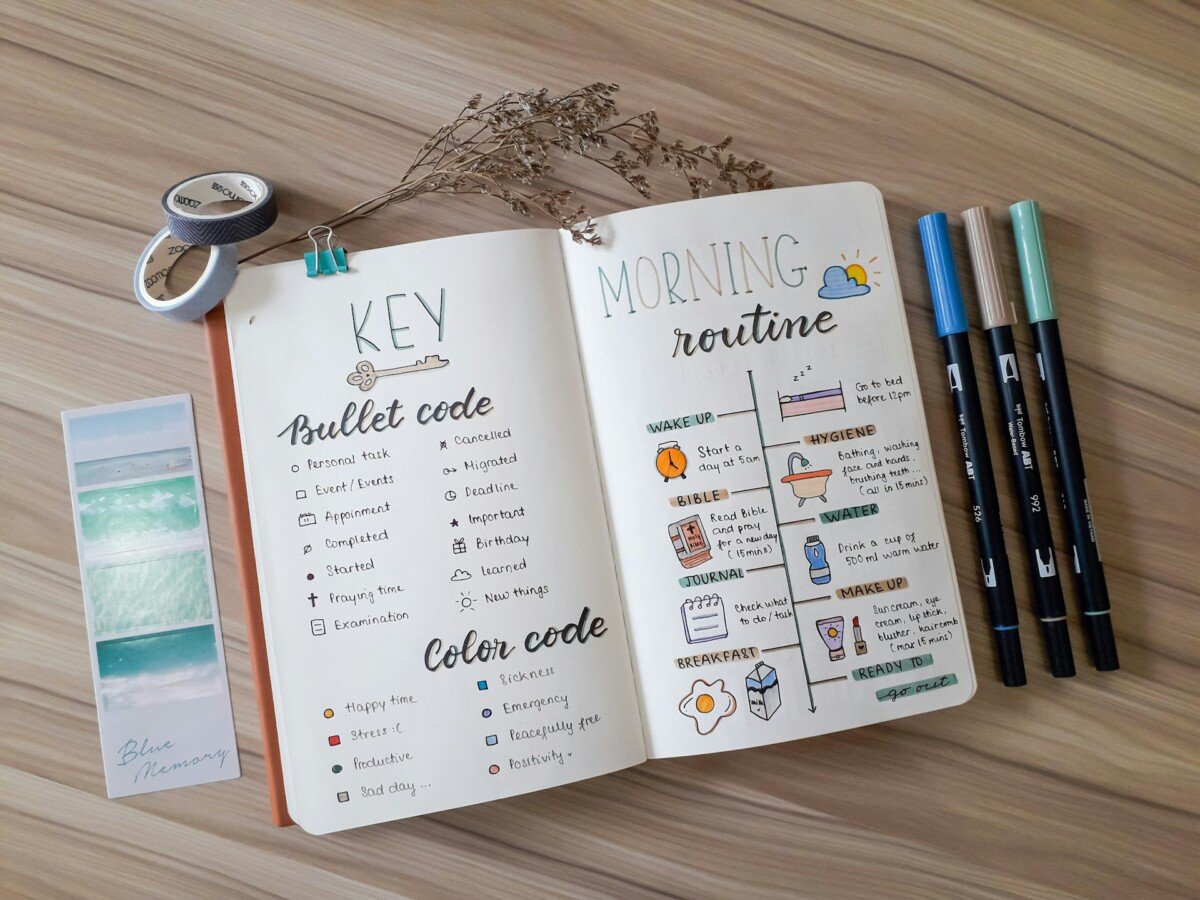
Most productivity advice describes routines as if every day goes exactly as planned: wake at 5 AM, exercise for 30 minutes, eat a healthy breakfast, start deep work by 8, take a break at 10, and so on, every day, without fail.
Then real life happens. The power goes out. Your child wakes up sick. A client calls with an urgent problem. Traffic adds 90 minutes to your commute. You slept badly and cannot focus. Your internet connection drops during the one meeting that mattered.
The problem is not that you lack discipline. The problem is that rigid routines are designed for ideal days, and ideal days are rare.
A meta-analysis published in Molecular Psychiatry (2024), covering 0.9 million participants across 32 countries, found that disruptions to daily routines were significantly associated with increased symptoms of depression, anxiety, and stress. Routine disruption is not just inconvenient. It affects your mental health and your ability to function.
Research on temporal resilience, published in the Academy of Management Review (2024), found that people who build flexibility into their routines, what the researchers call “margins” and “buffers,” are significantly better at recovering from schedule disruptions than those who operate with tightly packed, zero-slack schedules.
This article is about building the second kind of routine: one designed to survive the interruptions, not just the ideal mornings. It is for students, parents, freelancers, professionals, and anyone whose days rarely go exactly as planned.

Why Rigid Routines Fail
The “All or Nothing” Trap
The most common failure mode of rigid routines is binary thinking: if you cannot follow the routine perfectly, you abandon it entirely.
You planned to exercise at 6 AM, but you woke up at 7. So you skip the workout entirely. You planned a focused work block from 9 to 12, but a phone call disrupted you at 9:30. So you treat the whole morning as a loss and scroll through your phone.
This is not a character flaw. It is a design flaw in the routine. A system that only works under ideal conditions is not a good system.
The Unpredictability Problem
Some people have genuinely unpredictable days. Freelancers do not know which clients will call or what deadlines will shift. Parents cannot predict when a child will get sick. Students juggle classes, assignments, and part-time work with schedules that change week to week. Workers in Nigeria deal with power outages, traffic congestion, and infrastructure unpredictability that can erase an hour or more from any plan.
A routine designed for a predictable 9-to-5 schedule does not serve these people. They need a different approach.
Also Read | How to Build Leverage When You’re Starting From Zero
The Core Principle: Anchor Points, Not Timetables
The most resilient routines are not built around fixed times. They are built around anchor points: a small number of non-negotiable actions that happen every day, regardless of when.
An anchor point is not “exercise at 6 AM.” It is “exercise at some point today.” The commitment is to the action, not the time slot. This simple shift makes the routine robust against schedule disruptions, because no matter what time your day was derailed, the anchor points can still be completed.
What Makes a Good Anchor Point
- It is something you can do in varying amounts of time (5 minutes on a bad day, 30 minutes on a good day)
- It does not depend on a specific time or external condition
- It directly supports one of your most important goals or needs
- You can complete it even after a disruption
How Many Anchor Points to Set
Three to five is the ideal range. More than five becomes another rigid schedule in disguise. Fewer than three may not provide enough structure to keep your day on track.
Example set of anchor points for a freelancer:
- Complete one focused work session (minimum 25 minutes)
- Some form of physical movement (could be a full workout, a walk, or 10 minutes of stretching)
- Review and update task list
- One skill-building activity (reading, a short course module, practice)
- Plan tomorrow before the day ends
Notice what this list does not specify: the time any of these happen, the order they happen in, or the exact form they take. The commitment is to doing them, not to doing them at a particular hour.
The Flexible Routine Framework
Layer 1: Non-Negotiable Anchor Points (Daily)
These are your three to five core actions. They happen every day. The form may change, but the commitment does not.
| Anchor Point | Ideal Version | Minimum Version |
|---|---|---|
| Focused work | 2-hour deep work block | 25-minute focused sprint |
| Physical activity | 45-minute workout | 10-minute walk or stretch |
| Learning | 30 minutes of reading or coursework | 10 minutes of reading |
| Planning | 15-minute evening review and next-day planning | 3-minute task list scan |
| Connection | 30-minute meal or conversation with family/friend | One genuine check-in message |
The “minimum version” column is what makes this system resilient. On a perfect day, you do the ideal version. On a chaotic day, you do the minimum. You never do zero, because doing the minimum keeps the habit alive and gives you a sense of accomplishment even on difficult days.
Layer 2: Time Blocks (Flexible, Not Fixed)
Instead of scheduling every hour, designate broad time blocks for types of work:
- Morning block: Your most demanding mental work (if mornings are when you have the most energy)
- Midday block: Administrative tasks, communications, errands
- Afternoon/evening block: Lighter work, learning, planning
The key difference from a rigid schedule: these blocks can shift. If your morning is disrupted by a power outage, you do not lose the morning. You shift the demanding work to whenever you regain power. The block moves. The work still happens.
Layer 3: Buffer Time (Built-In Margin)
This is the element most people leave out, and it is the most important for resilience.
Research on temporal resilience (Perez-Nordtvedt et al., Academy of Management Review, 2024) found that building flex into schedules prevents minor interruptions from wrecking an entire day. The study’s lead researcher recommends leaving at least a half-hour between meetings and notes that “if everything’s super-duper wound tight, then nobody’s ever going to be on time.”
Practical buffer strategies:
- Leave 15 to 30 minutes between scheduled commitments
- Build one “catch-up” hour into each day with nothing planned
- Do not schedule more than 70 to 80% of your available time
- Keep one day per week lighter than the others to absorb overflow
Buffers feel like “wasted” time when the day goes smoothly. But they are the shock absorbers that keep everything moving when the day does not.
Also Read | How to Build Systems That Achieve Your Goals in 90 Days
What to Do When the Day Goes Off Schedule
Even the best routine will face disruptions. The question is not whether your day will be interrupted, but what you do after the interruption. Here is a simple recovery protocol.
The 3-Step Reset
Step 1: Pause (2 minutes). When your plan is disrupted, stop. Take two minutes to acknowledge what happened and assess the situation. Do not immediately try to “make up” lost time. That leads to rushing, stress, and poor decisions.
Step 2: Triage (3 minutes). Look at what remains of your day. Ask three questions:
- What absolutely must happen today? (True deadlines, commitments to others, non-negotiable obligations)
- What can be moved to tomorrow without real consequences?
- Which of my anchor points can I still complete, even in minimum form?
Step 3: Rebuild (5 minutes). Create a revised plan for the rest of the day based on your triage. It will not look like your original plan. It does not need to. It needs to cover the “must happen” items and as many anchor points as possible.
Total time: 10 minutes. This brief reset prevents the common pattern of losing an entire day because the first two hours did not go as planned.
Building Routines for Different Life Situations
For Students With Unpredictable Schedules
Students often have class schedules that change daily, combined with part-time work, study group commitments, and social obligations. A fixed daily routine is impractical.
Approach: Use anchor points rather than fixed times. Each day, commit to:
- One focused study session (minimum 25 minutes, ideally 60 to 90 minutes)
- Review lecture notes or readings for the next day
- One physical activity (even a short walk between classes)
- 10 minutes of planning before bed
The timing varies every day. The commitment does not.
For Parents With Young Children
Parents of young children face the most unpredictable schedules of any group. Nap times shift, illnesses arrive without warning, and the needs of a child override any plan.
Approach: Accept that your routine will be interrupted daily. Build anchor points that can be done in fragments:
- One meaningful work task (even if done in three 15-minute fragments rather than one 45-minute block)
- One personal activity (reading, exercise, a phone call with a friend) during a nap or after bedtime
- A 5-minute end-of-day planning session after the children are asleep
The minimum version of each anchor point should be achievable even on the worst days.
For Freelancers and Remote Workers
Freelancers face a dual challenge: no external structure (no boss enforcing a schedule) and variable workloads (some weeks are packed, others are quiet).
Approach: Create a “default day” template that you follow when nothing unusual is happening, but be ready to flex:
- Morning: Focused client work (the kind that requires concentration)
- Midday: Communications, invoicing, administrative tasks
- Afternoon: Skill building, marketing, or lighter work
When a client emergency disrupts the morning, shift the focus work to the afternoon. When a slow week arrives, use the freed-up time for skill building and business development rather than drifting.
For People Dealing With Infrastructure Challenges
In many parts of Nigeria and across Africa, power outages, unreliable internet, and traffic congestion are daily realities, not occasional inconveniences. A routine that depends on constant electricity or fast internet is designed to fail.
Approach: Build your routine around what you can control:
- Identify tasks that require power/internet and tasks that do not. Plan both.
- Have a “no-power” task list: reading, planning, brainstorming, organizing physical materials, making phone calls.
- If you work from home, have a backup location (a co-working space, a friend’s house, a cafe with a generator) for critical days.
- Charge devices during off-peak hours when power is stable.
- If traffic is unpredictable, have work you can do on your phone during commutes (reading, responding to messages, planning).
The routine does not stop when the power goes out. It shifts to a different mode.
Also Read | Why Some Online Courses Are Worth More Than Others: What Students Should Check
The “Good Day / Bad Day” System
One of the most practical approaches to flexible routines is to maintain two versions of your day: a “good day” plan and a “bad day” plan.
Good Day Plan
Everything goes reasonably well. You follow your anchor points in their ideal form. You complete your time blocks. You use your buffer time for overflow or for getting ahead on tomorrow’s tasks.
Bad Day Plan
Something significant disrupts your plans: illness, emergency, infrastructure failure, emotional overwhelm. On a bad day, you follow the minimum version of your anchor points and focus only on true priorities.
| Component | Good Day | Bad Day |
|---|---|---|
| Focused work | 2+ hours of deep work | 25-minute sprint on highest priority task |
| Exercise | Full workout | 10-minute walk or stretching |
| Learning | 30 minutes of coursework or reading | 10 minutes of reading |
| Planning | Full evening review and next-day plan | 3-minute scan of tomorrow’s calendar |
| Communication | All messages and emails addressed | Only urgent messages addressed |
The key insight: A bad day where you complete the minimum version of your anchor points is dramatically better than a bad day where you accomplish nothing because the routine “broke.” The minimum version keeps the habit alive, preserves your sense of agency, and prevents the downward spiral of missed days turning into missed weeks.
Expert Tips
Design your routine for your worst day, not your best day. If your routine only works when you have perfect energy, uninterrupted time, and no distractions, it will fail most days. Start by designing the minimum version. Then expand for good days.
Track habit completion, not time. Instead of tracking whether you “studied from 7 to 11,” track whether you completed a study session, any study session, that day. Binary tracking (did it or did not do it) is more motivating and more accurate for people with irregular schedules than time tracking.
Use “habit stacking” to protect anchor points. Attach your anchor points to existing daily events that happen regardless of your schedule: after your first meal, after arriving somewhere, before bed. These natural transition points provide built-in triggers that work even when the rest of your day is unpredictable.
Do not punish yourself for bad days. The research is detailed: guilt and self-criticism after a disrupted day make you less likely to restart the routine tomorrow. Acknowledging that the day was difficult, completing whatever minimum version you can, and starting fresh the next day is more effective than beating yourself up.
Review and adjust weekly. Every Sunday (or whichever day works for you), spend 10 minutes reviewing the past week. Which anchor points did you hit consistently? Which ones did you miss? What disruptions were most common? Use this information to adjust your routine to better fit reality.
Distinguish between “off schedule” and “off track.” Being off schedule means your timing changed but your actions still happened. Being off track means you stopped doing the things that matter. A routine that survives being off schedule prevents you from going off track.
Common Mistakes to Avoid
Copying someone else’s routine. Your life circumstances, energy patterns, obligations, and environment are unique. A routine that works for a single person with a 9-to-5 job and reliable infrastructure will not work for a parent with a freelance career and unpredictable power supply. Build your routine around your actual life, not someone else’s idealized version.
Scheduling every minute of every day. A schedule with no slack is a schedule that will break at the first disruption. Leave 20 to 30% of your day unscheduled. That margin is what absorbs disruptions without cascading into a total collapse.
Treating disruptions as failures. A disrupted day is a normal day, not a failed day. The routine is not broken because it was interrupted. It is broken only if you cannot recover from the interruption. Design for recovery, not for perfection.
Abandoning the entire routine because you missed one part. Missing your morning workout does not mean the whole day is ruined. Do the workout later, or do the minimum version, or skip it entirely and complete your other anchor points. One missed element is one missed element, not a reason to abandon the rest of the day.
Setting too many priorities. If everything is a priority, nothing is. Three to five anchor points is enough. Adding more turns your flexible system into the same rigid schedule you were trying to avoid.
Ignoring your energy patterns. Some people focus best in the morning. Others hit their stride in the afternoon or evening. Schedule your most demanding anchor points for your natural high-energy periods, not for the time that sounds most impressive.
Also Read | How to Track Your Spending and Discover Where Your Money Goes
Frequently Asked Questions
1. How do I stay productive when my schedule is constantly changing?
Focus on anchor points (three to five non-negotiable daily actions) rather than fixed time slots. The commitment is to completing the action, not to completing it at a specific time. This approach survives schedule changes because the actions can shift to whenever time becomes available. On particularly chaotic days, use the minimum version of each anchor point to maintain momentum without adding stress.
2. What should I do when my day is completely derailed?
Apply the 3-step reset: pause for two minutes to acknowledge the disruption, triage in three minutes (what must happen today vs. what can wait), and rebuild in five minutes (create a revised plan for the remaining day). Then focus on completing as many anchor points as possible in their minimum form. A bad day with three minimum-version anchor points completed is far better than a day with nothing accomplished.
3. How many habits or goals should a daily routine include?
Three to five anchor points is the ideal range. More than five begins to feel rigid and overwhelming, which defeats the purpose of a flexible routine. Each anchor point should have both an ideal version (for good days) and a minimum version (for disrupted days). You can always add complexity later once the core anchors are consistent.
4. Is it better to follow a strict routine or a flexible one?
For people with predictable, stable days, a structured routine with fixed times can work well. For everyone else, including parents, freelancers, students with variable schedules, and anyone dealing with infrastructure challenges, a flexible routine built on anchor points and buffer time is significantly more sustainable. The research on temporal resilience confirms that flexibility and built-in margins improve recovery from disruptions.
5. How long does it take to build a routine that feels natural?
Habit research suggests that simple habits take an average of 66 days to become automatic (Lally et al., European Journal of Social Psychology, 2010), though the range varies from 18 to 254 days. The more complex the habit, the longer it takes. Start with your most important anchor point, practice it daily for several weeks, and add the next one only after the first feels natural. Trying to implement five new habits simultaneously is a common reason routines fail.
Key Takeaways
- Rigid routines fail because they are designed for ideal days, and ideal days are rare. A routine built on anchor points (three to five non-negotiable daily actions) survives disruptions because the actions can shift in time without being abandoned.
- Every anchor point should have an ideal version and a minimum version. On a good day, do the ideal. On a bad day, do the minimum. Never do zero.
- Buffer time (15 to 30 minutes between commitments, one unscheduled hour per day, 20 to 30% of your time left open) is not wasted time. It is the margin that prevents disruptions from cascading into total collapse.
- Research on temporal resilience confirms that people with built-in schedule flexibility recover from disruptions faster and more effectively than those with tightly packed schedules.
- The 3-step reset (pause, triage, rebuild) takes 10 minutes and prevents a disrupted morning from becoming a lost day.
- A disrupted day is a normal day, not a failed day. Missing one part of your routine is not a reason to abandon the rest.
- Design your routine for your actual life, including its interruptions, infrastructure limitations, and unpredictable demands, not for an idealized version of your life that does not exist.
Conclusion
The most useful routine is not the most ambitious one. It is the one you can actually follow, even on days when nothing goes as planned.
That means building flexibility into the design from the start: anchor points instead of timetables, minimum versions alongside ideal versions, buffer time that absorbs disruptions, and a simple recovery protocol for when things fall apart.
You will still have bad days. You will still face interruptions, emergencies, and situations you did not anticipate. The difference is that with a flexible routine, a bad day costs you a few hours. Without one, a bad day costs you the entire day and, often, the motivation to start again tomorrow.
Start with three anchor points. Give each one a minimum version. Leave buffer time in your schedule. And the next time your day goes off script, reset in 10 minutes and keep going.
Also Read | How to Save Money Without Giving Up Everything You Enjoy

