



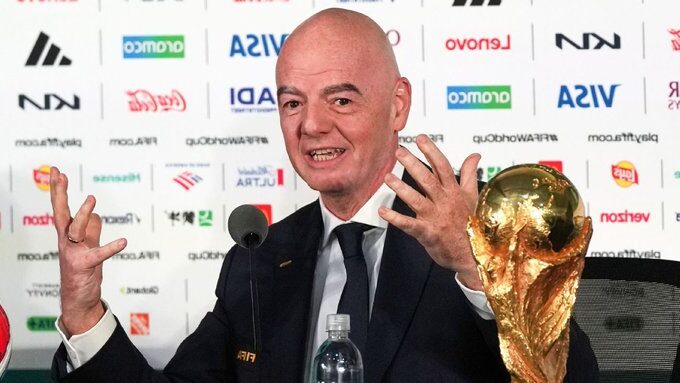
FIFA president Gianni Infantino told reporters to “chill and relax” on Wednesday as he defended the 2026 World Cup’s contentious ticket prices, visa complications, Iran’s participation, and the shocking denial of Somali referee Omar Artan’s entry into the United States.
His dismissive tone during a 66-minute press conference in Mexico City signals more than mere frustration; it reveals a growing power imbalance where national security agendas override international sports governance.
Infantino justified the $60 starting ticket price as the lowest among American sports during playoffs, warning that lower prices would fuel secondary-market inflation.

Yet fans across the world and beyond face average costs of $500, a barrier that excludes working-class supporters from the tournament’s cultural economy.
The U.S. barred Artan despite his valid visa, citing “vetting concerns,” while allowing Iran’s players but blocking anyone with IRGC ties.
Infantino insisted he has “no regrets” about hosting in the U.S., yet his inability to override Washington’s decisions exposes FIFA’s limited sovereignty.
This isn’t just about logistics. It’s about who controls global sports: an international body or a single government wielding border power as political leverage.
FIFA president Gianni Infantino has told reporters to ‘chill and relax’ as he defended World Cup ticket prices, VISA issues, Iran’s participation and a referee being denied entry into the USA. pic.twitter.com/LiDcYeRIlB
— Sky Sports News (@SkySportsNews) June 11, 2026
The referee’s deportation and Iran’s precarious participation signal future tournaments may face similar nationality-based exclusions, threatening the World Cup’s core principle of universal inclusion.
Fans shouting won’t fix this, Infantino said. But silence won’t either. As the tournament opens, the real question isn’t whether to chill, it’s whether global sports can survive when one nation holds the keys to the gate.
Also Read | Seplat Energy Names Tony Elumelu Chairman, Effiong Okon CEO

