



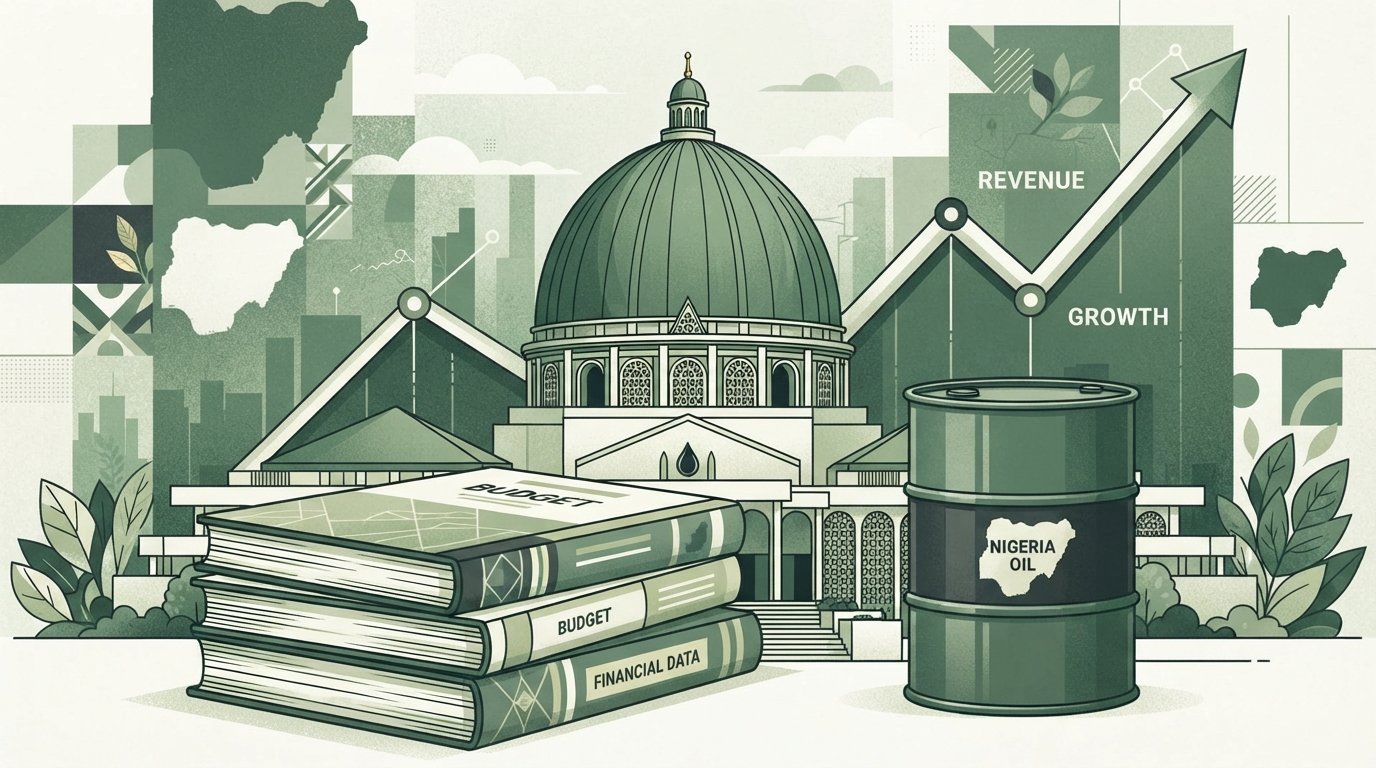
Imagine a government arguing with its own parliament for months over how much to spend, finally signing a budget in April, four months into the year it was meant to fund, and then watching that same year become one of the most consequential in the country’s economic history. That was Nigeria in 2005.
The 2005 Appropriation Bill is easy to overlook today, when Nigeria’s federal budget runs into tens of trillions of naira. But that single fiscal year sits at the center of a story every student of economics, every civics teacher, and every curious citizen should understand. It was the year Nigeria negotiated its historic Paris Club debt relief, the year its banking sector was being rebuilt from the ground up, and the year the tension between saving oil money and spending it played out in full public view.
This analysis of the 2005 Appropriation Bill and Budget explains what the budget contained, the political battle behind it, the reform environment surrounding it, and, most importantly, how its decisions still shape the Nigerian economy today. Along the way, you will learn how any national budget actually works, how to read one yourself, and what lessons 2005 offers for the budgets Nigeria passes now.
Budget Basics: What an Appropriation Bill Actually Is
Before analyzing 2005, the terms need to be clear, because they are often mixed up.
An appropriation bill is the legal document through which a government asks the legislature for permission to spend public money. In Nigeria, the President presents it to the National Assembly, both chambers debate and usually amend it, and once passed and signed, it becomes the Appropriation Act, the budget with the force of law. Under Section 80 of the 1999 Constitution, no money may be withdrawn from the Federation Account except as authorized by such a law.
A typical Nigerian budget rests on four assumptions:
- Oil price benchmark: the assumed price per barrel used to project oil revenue.
- Oil production estimate: assumed barrels per day.
- Exchange rate: the naira/dollar rate used for conversions.
- Spending split: recurrent expenditure (salaries, overheads, debt service) versus capital expenditure (roads, schools, hospitals).
Keep the first item in mind. The fight over the oil benchmark was the heart of the 2005 story, and it remains the heart of every Nigerian budget debate two decades later.
Also Read | How Artificial Intelligence Is Transforming Education in 2026
Nigeria in 2005: The Economic Backdrop
The 2005 budget did not arrive in a vacuum. Nigeria was six years into civilian rule under President Olusegun Obasanjo and midway through his second term, the peak of what economists often call the reform era.
Three conditions defined the moment:
- Rising oil prices. Global crude prices were climbing well above what Nigerian budgets assumed, generating windfall revenue year after year.
- A reform team with a plan. Finance Minister Dr. Ngozi Okonjo-Iweala and her colleagues were implementing NEEDS, the National Economic Empowerment and Development Strategy, Nigeria’s home-grown reform framework endorsed by international institutions.
- A crushing debt burden. Nigeria owed roughly $30 billion to the Paris Club of creditor nations, much of it accumulated interest and penalties from loans taken decades earlier. Debt service consumed money that could have funded schools and clinics.
The reformers’ core fiscal idea was simple and, for Nigeria, radical: budget conservatively using a modest oil price, and save everything earned above it. That saving vehicle, the Excess Crude Account (ECA), was created in 2004 and had accumulated several billion dollars within its first year, according to accounts of the period.
The 2005 budget tested how long that discipline could hold.
What the 2005 Appropriation Bill Contained
The Headline Features
According to the International Monetary Fund’s 2005 Article IV consultation report on Nigeria, President Obasanjo signed the 2005 appropriations bill into law on April 12, 2005, after protracted negotiations between the executive and the National Assembly. The Act’s key features, as documented by the IMF, were striking:
- It implied a 57 percent increase in federal primary spending compared with 2004, a sharp expansion by any standard.
- The oil price benchmark was raised from $25 to $30 per barrel, releasing more projected revenue into the spending plan.
- The expansion was financed by higher oil revenue, half of the windfall savings accumulated in 2004, and projected privatization and asset-sale receipts.
In naira terms, the federal budget for 2005 stood at roughly ₦1.8 trillion, a figure that seemed enormous then and looks almost quaint beside the ₦68.3 trillion budget Nigeria passed for 2026.
Where the Money Was Meant to Go
The 2005 budget’s stated priorities followed the NEEDS framework: power, roads, water, health, education, and security, alongside the ever-present recurrent bill for salaries and overheads. Like most Nigerian budgets of the era, recurrent spending claimed the larger share, and capital projects depended heavily on how much oil revenue actually materialized and how quickly ministries could implement.
Callout: Why the Benchmark Fight Mattered
In plain terms: if the budget assumes $25 per barrel and oil sells for $50, the difference is windfall that can be saved. If lawmakers raise the assumption to $30, part of that windfall is spent immediately instead. Every dollar added to the benchmark is a dollar moved from tomorrow’s cushion to today’s spending. The 2005 debate was an early round of a contest between saving and spending that Nigeria is still fighting.
The Executive – Legislature Standoff
The four-month delay in passing the 2005 budget was not mere bureaucracy. It reflected a genuine constitutional tension that persists today.
The executive, guided by its economic team, wanted a conservative benchmark and restrained spending to protect the savings strategy and macroeconomic stability. Members of the National Assembly, answering to constituents who could see oil money flowing, pushed for a higher benchmark and larger allocations. The compromise, a raised benchmark, and the release of half the previous year’s windfall savings, gave both sides something and cost the savings strategy something.
The IMF’s assessment at the time warned that full implementation of the expansionary budget, combined with larger transfers to state and local governments, would sharply widen the non-oil primary deficit, in effect making the economy more dependent on oil revenue even while reformers preached diversification.
For students of government, the lesson is that a budget is never just an economic document. It is a negotiated settlement between institutions with different incentives.
The Reforms Around the Budget: Debt Relief, Banking, and Savings
The 2005 fiscal year cannot be analyzed in isolation, because three landmark policies unfolded alongside the Appropriation Act and interacted with it.
Paris Club Debt Relief
In 2005, Nigeria concluded its historic deal with the Paris Club to exit roughly $30 billion of external debt. The arrangement involved a substantial write-off, combined with Nigeria paying off the remainder from its oil savings. The deal was possible precisely because Nigeria could demonstrate fiscal credibility: a savings account with real money in it and a reform program international partners trusted. The expansionary 2005 budget strained that credibility; the savings that survived it helped seal the deal.
Banking Consolidation
Under Central Bank Governor Charles Soludo, Nigeria’s banks were required to raise their minimum capital dramatically, forcing scores of small, fragile banks to merge into a far smaller number of larger institutions by the end of 2005. Bigger banks could finance bigger projects, including the government contractors and capital projects the 2005 budget funded.
The Excess Crude Account
The ECA, created in 2004, embodied the saving philosophy. Despite the 2005 budget drawing down half of the 2004 windfall, disciplined saving in the following years grew the account to about $20 billion by the time Obasanjo left office in 2007, a level of fiscal buffer Nigeria has never seen since. The Fiscal Responsibility Act of 2007 later attempted to give the oil-price-based fiscal rule a statutory footing, though the ECA itself was never given firm constitutional protection, an omission with long consequences.
How It Affects Nigeria’s Economy Till Today
This is the question behind the secondary keyword of this article, and it deserves a direct answer. The 2005 Appropriation Bill and its surrounding fiscal choices affect Nigeria today through four channels.
1. The Benchmark Politics It Normalized
The 2005 episode established a durable pattern: the executive proposes a cautious oil benchmark; the legislature raises it to fund more spending. The same script played out in 2026, when the National Assembly revised the benchmark upward from $64.85 to $75 per barrel while adding roughly ₦10 trillion to the President’s proposal. Anyone analyzing a modern Nigerian budget is watching a rerun of the 2005 negotiation with bigger numbers.
2. The Savings Culture It Weakened, and Briefly Proved
2005 demonstrated both that Nigeria could save (the ECA reached about $20 billion by 2007) and that savings without legal protection are politically irresistible. In later years, the ECA was drawn down to near-empty, leaving Nigeria exposed to oil price crashes in 2008–2009, 2014–2016, and 2020. Commentators today still cite the Obasanjo-era account when arguing for rebuilding fiscal buffers. The precedent of releasing half the windfall in the 2005 budget was the first crack in the dam.
3. The Debt Relief Dividend, Spent and Reborrowed
The Paris Club exit, enabled by the fiscal credibility of the 2004–2005 period, freed Nigeria from a debt overhang and reduced debt service for years. That breathing room supported growth through the late 2000s. Yet the deeper lesson went unlearned: by the mid-2020s, Nigeria’s public debt had climbed to levels far beyond the burden it escaped in 2005, with recent estimates putting total public debt above ₦150 trillion. Analysts writing in 2026 openly ask why the structural discipline of that era did not outlast its architects.
4. The Institutions It Left Behind
The era around the 2005 budget produced lasting machinery: the oil-price fiscal rule, the Fiscal Responsibility Act (2007), the consolidated banking sector that still forms the backbone of Nigerian finance, and the Sovereign Wealth Fund that later partially replaced the ECA. Every Nigerian who banks with one of today’s large banks, and every budget debate that mentions a “benchmark,” is touching the legacy of that period.
Also Read | How Artificial Intelligence Is Transforming Education in 2026
Comparison Table: 2005 Versus 2026 at a Glance
| Indicator | 2005 | 2026 |
|---|---|---|
| Federal budget size | About ₦1.8 trillion | ₦68.3 trillion as passed |
| Oil benchmark dispute | Raised from $25 to $30 | Raised from $64.85 to $75 |
| Direction of external debt | Exiting about $30 billion (Paris Club) | Total public debt above ₦150 trillion |
| Fiscal buffer | ECA growing toward $20 billion | Rebuilding reserves; ECA largely depleted |
| Core tension | Save windfall vs. spend now | Save windfall vs. spend now |
The numbers changed. The argument did not.
Case Studies: Three Threads From 2005 to 2026
Case Study 1: The Teacher’s Salary and the Federation Account
A secondary school teacher in a Nigerian state in 2005 was paid partly from her state’s share of the Federation Account, which swelled when the benchmark rose, and oil flowed. In boom years, salaries came promptly; when oil crashed, and no savings remained, states fell months behind. Her career traced the entire cost of weak fiscal buffers. The lesson: budget assumptions made in Abuja reach every classroom in the country.
Case Study 2: The Bank Merger That Outlived the Budget
A mid-sized bank that could not meet the 2005 capital requirement merged with two rivals. The combined institution later financed power projects, mortgages, and small businesses at a scale none of the three could have managed alone. Of the reforms surrounding the 2005 budget, banking consolidation arguably delivered the most durable everyday impact.
Case Study 3: The Windfall That Went Two Ways
Of the oil windfall Nigeria earned in 2004, half was preserved, and half was released into the 2005 budget. The preserved half contributed to the credibility that secured debt relief and to the $20 billion buffer of 2007. The released half financed a spending surge whose capital projects had mixed completion records. Two decades later, the contrast reads like a controlled experiment in fiscal policy: saved money bought Nigeria options; hurried spending bought far less than it promised.
How to Read a Budget: A Practical Guide
You can apply the tools of this analysis to any budget, including the current one. Follow these steps:
- Find the assumptions first. Oil price, production, exchange rate, growth, and inflation. Ask: are these realistic or convenient?
- Compare recurrent versus capital spending. A budget dominated by salaries and overheads builds little.
- Check the deficit and how it is financed. Borrowing is not automatically bad; borrowing for consumption usually is.
- Track changes between proposal and passage. What the legislature added or raised tells you where political pressure sits.
- Follow implementation, not announcement. The passed budget is a plan; quarterly implementation reports from the Budget Office reveal reality.
- Look for the buffer. Ask what happens to revenue above the benchmark and whether any law protects it.
Expert Tips and Common Mistakes
Expert Tips
- Judge budgets over decades, not news cycles. The 2005 budget looked expansionary in April 2005; its full meaning only emerged through the debt deal, the ECA’s rise and fall, and the borrowing that followed.
- Watch the benchmark like a hawk. It is the single number that best reveals whether a Nigerian government is saving or spending its luck.
- Read primary sources. The IMF Article IV reports, Central Bank of Nigeria fiscal summaries, and Budget Office documents are freely available and far more reliable than social media summaries.
- Connect fiscal policy to daily life. Salaries, fuel prices, school funding, and bank lending all trace back to appropriation decisions.
Common Mistakes to Avoid
- Confusing the bill with the act. The appropriation bill is a proposal; only the signed act authorizes spending.
- Treating budget size as achievement. A larger budget with weak implementation delivers less than a smaller one executed well.
- Ignoring state and local government finances. Federation Account distributions meant the 2005 choices hit all three tiers, not just Abuja.
- Assuming oil booms last. Every Nigerian fiscal crisis since 2005 began with a budget that assumed the good times would continue.
- Reading only friendly sources. Government statements, opposition claims, and independent analyses each carry bias; triangulate.
Frequently Asked Questions
1. What was the 2005 Appropriation Bill of Nigeria?
It was the federal spending proposal for the 2005 fiscal year, signed into law by President Olusegun Obasanjo on April 12, 2005, after months of negotiation with the National Assembly. It authorized a federal budget of roughly ₦1.8 trillion and marked a sharp expansion in spending.
2. Why was the 2005 budget signed so late?
The executive and the National Assembly disagreed over the oil price benchmark and the overall size of spending. The compromise raised the benchmark from $25 to $30 per barrel and released half of the previous year’s oil windfall savings into the budget.
3. Was the 2005 budget expansionary or conservative?
Expansionary. The IMF documented a 57 percent increase in federal primary spending compared with 2004, which it warned would widen the non-oil deficit and deepen oil dependence.
4. What is an oil price benchmark, and why does it matter?
It is the assumed oil price used to project revenue. Revenue earned above it can be saved as a buffer against crashes. Raising the benchmark converts potential savings into immediate spending, which is why it is the most contested number in every Nigerian budget.
5. How is the 2005 budget connected to Nigeria’s debt relief?
Nigeria’s credibility, built on its savings account and reform program, helped it negotiate the 2005 Paris Club deal that resolved about $30 billion in external debt. The savings that survived the expansionary budget were part of what made the deal work.
6. What was the Excess Crude Account, and what happened to it?
The ECA, created in 2004, held oil revenue earned above the benchmark. It grew to about $20 billion by 2007 but, lacking firm legal protection, was drawn down in later years and now stands largely depleted, leaving Nigeria more exposed to oil price shocks.
7. How does the 2005 budget affect the Nigerian economy today?
Through four channels: the benchmark-raising politics it normalized (repeated as recently as the 2026 budget), the savings culture it both proved and weakened, the debt-relief dividend that was later reborrowed many times over, and institutions such as the Fiscal Responsibility Act and the consolidated banking sector.
8. How big was the 2005 budget compared to today’s?
About ₦1.8 trillion versus ₦68.3 trillion passed for 2026. Inflation, a larger economy, and currency depreciation explain much of the growth in the number, which is why analysts compare budgets as shares of GDP or in real terms rather than raw naira.
9. Where can I read the original documents?
The IMF’s 2005 Article IV consultation report on Nigeria (imf.org), the Central Bank of Nigeria’s fiscal policy summaries (cbn.gov.ng), and Nigeria’s Budget Office publications (budgetoffice.gov.ng) are the best starting points.
10. What is the single biggest lesson of the 2005 budget?
That fiscal discipline is a political achievement, not just an economic one. The rules and savings of that era worked while leadership defended them and eroded when it did not, which is why analysts argue that durable reform must be written into strong, enforceable law.
Key Takeaways
- The 2005 Appropriation Bill, signed in April 2005 after a prolonged executive–legislature standoff, expanded federal primary spending by 57 percent and raised the oil benchmark from $25 to $30 per barrel.
- It sat at the center of Nigeria’s reform era, alongside the Paris Club debt relief, banking consolidation, and the Excess Crude Account.
- The budget revealed the permanent tension in Nigerian fiscal politics: saving oil windfalls versus spending them, a contest replayed in every budget since, including 2026’s.
- Its era proved Nigeria could build buffers (about $20 billion by 2007) and showed how quickly unprotected savings can be spent.
- The debt relief it helped enable was a historic dividend that later borrowing has since far exceeded.
- For readers, the practical takeaway is a method: check the assumptions, follow the benchmark, compare proposal with passage, and track implementation.
Conclusion
The 2005 Appropriation Bill was one budget in one year, yet it compressed into twelve months nearly every theme that defines Nigerian economic policy: the argument over oil assumptions, the pull between saving and spending, the friction between executive and legislature, and the difference between passing reforms and protecting them.
Two decades on, Nigeria debates a budget nearly forty times larger in naira terms, with the same script and higher stakes. That is precisely why studying 2005 is worthwhile. It shows that good fiscal outcomes are possible, that they are fragile, and that the citizens most affected by budget choices, students, teachers, workers, and families, are best served when they understand the document well enough to hold its authors accountable.
Also Read | The Story of Ambrose Alli University: How AAU Overcame Its Darkest Days

